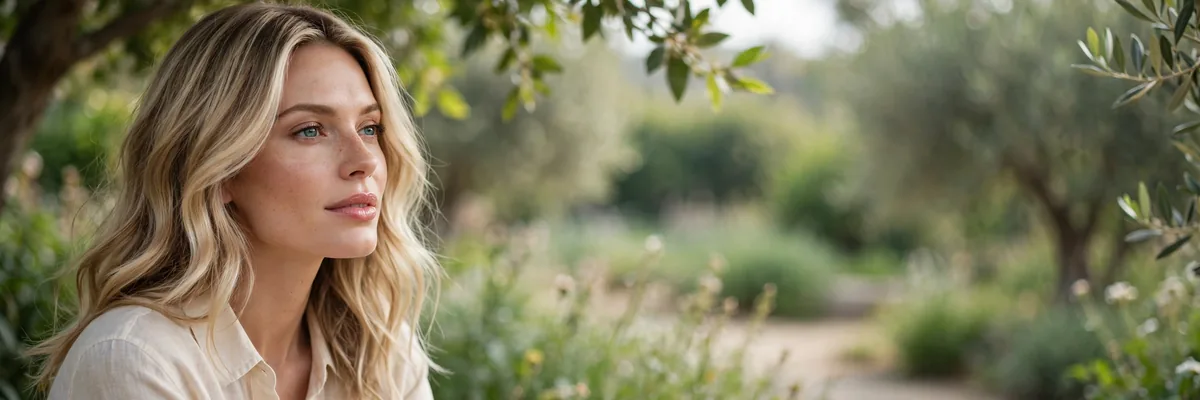
Fine hair doesn't need more hair — it needs smarter light.
Blonde balayage is the single most flattering color technique for fine hair, and the reason is simple: it paints dimension exactly where thin strands need it. By weaving brightness through the mid-lengths and ends while keeping the roots a touch deeper, a skilled colorist creates the optical illusion of density. Fine hair that looked flat in one flat color suddenly has movement, depth, and shape — all from light doing the heavy lifting.
The trick is choosing the right kind of blonde for your base color and skin tone. Cool beige blondes keep fine hair looking modern and expensive, while warm honey and caramel balayage wrap thin strands in a golden glow that flatters peachy and olive complexions. Either way, the placement matters more than the shade: face-framing brightness opens up your features, and lived-in roots mean you can stretch appointments to twelve weeks without a harsh grow-out line.
Below you'll find twenty balayage ideas tailored to fine hair, each one focused on building the look of fullness without damage. We cover root smudges, color melting, babylights-blended balayage, and low-maintenance lived-in blonde — plus the styling tricks that make each color sing. Bring your favorite to your colorist, ask about a bond-building treatment like Olaplex No. 3 between sessions, and get ready for fine hair that finally looks as thick as it feels.
Soft Beige Root Smudge Balayage
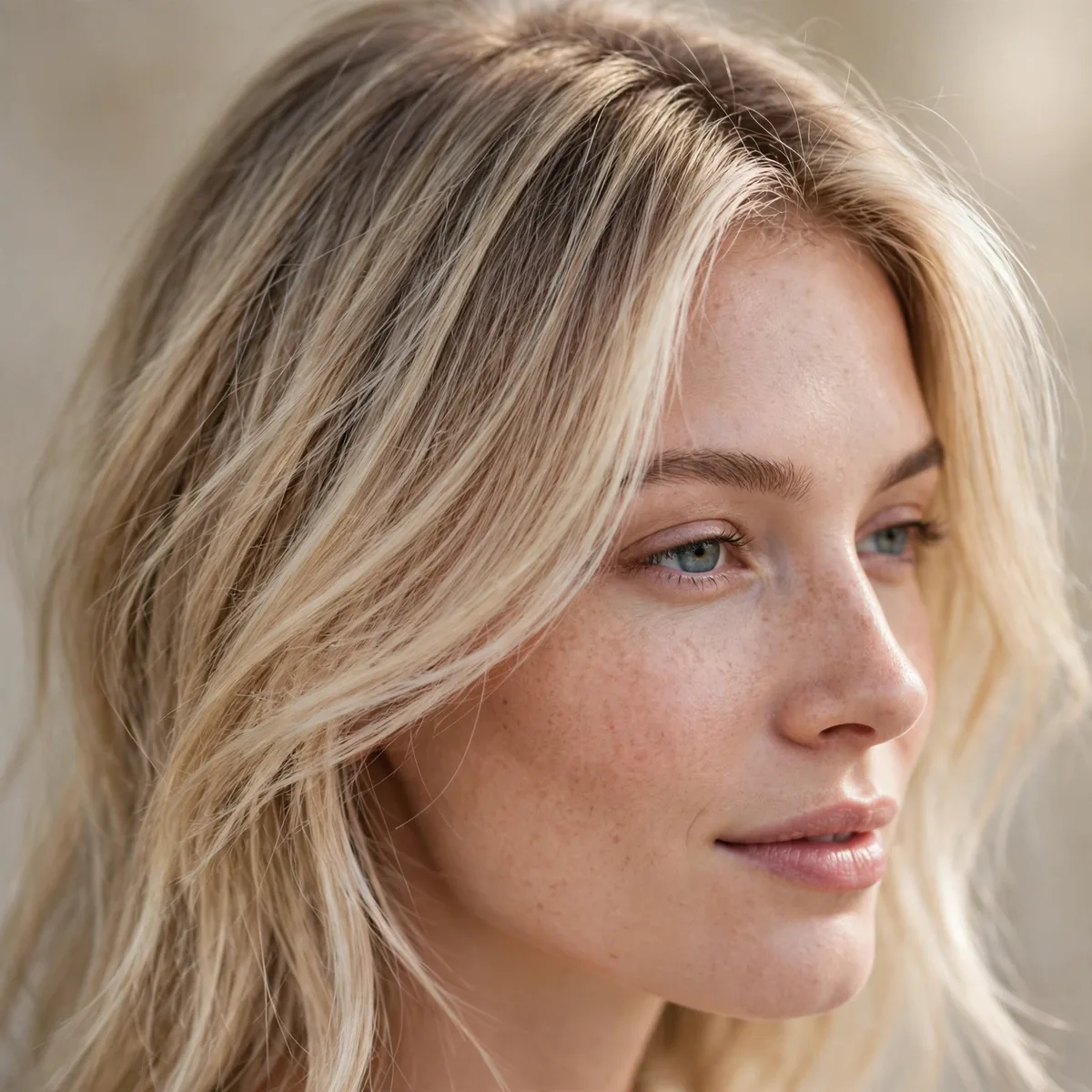
A beige root smudge is the quiet hero of balayage for fine hair. Instead of a stark line where your natural root meets the blonde, your colorist melts a demi-permanent shade just half a level darker than the mid-lengths into the first two inches. The result is a seamless gradient that makes regrowth invisible and gives fine hair a denser-looking crown — because the eye reads the slightly deeper root as shadow, and shadow reads as volume.
This technique works beautifully on hair that falls flat at the scalp, which is the classic fine-hair complaint. The smudge adds depth at the part and crown while the balayaged ends stay bright and airy. Styling takes almost no effort: rough-dry with a little volumizing mousse, then add a few bends with a one-inch curling iron, alternating directions. The waves catch the two tones differently, multiplying the dimensional effect with zero extra product.
Beige is the most forgiving blonde for fine hair because it sits in that sweet spot between warm and cool. It flatters fair to medium skin with neutral or cool undertones, and it doesn't show brassiness the way ashier blondes sometimes do on delicate strands. Ask your colorist for a toner with a hint of gold — something like a level 9 beige — and request a gloss refresh every six to eight weeks to keep the smudge soft and the ends luminous.
Maintenance is refreshingly low for how polished this looks. Purple shampoo once a week keeps the beige from drifting brassy, and a pea-sized amount of argan oil on the ends prevents the feather-light texture from looking wispy. Because the root is smudged rather than bleached to the scalp, you avoid the breakage-prone zone entirely — which matters enormously when every strand counts. Touch-ups every ten to twelve weeks keep it fresh.
Honey-Toned Lived-In Blonde
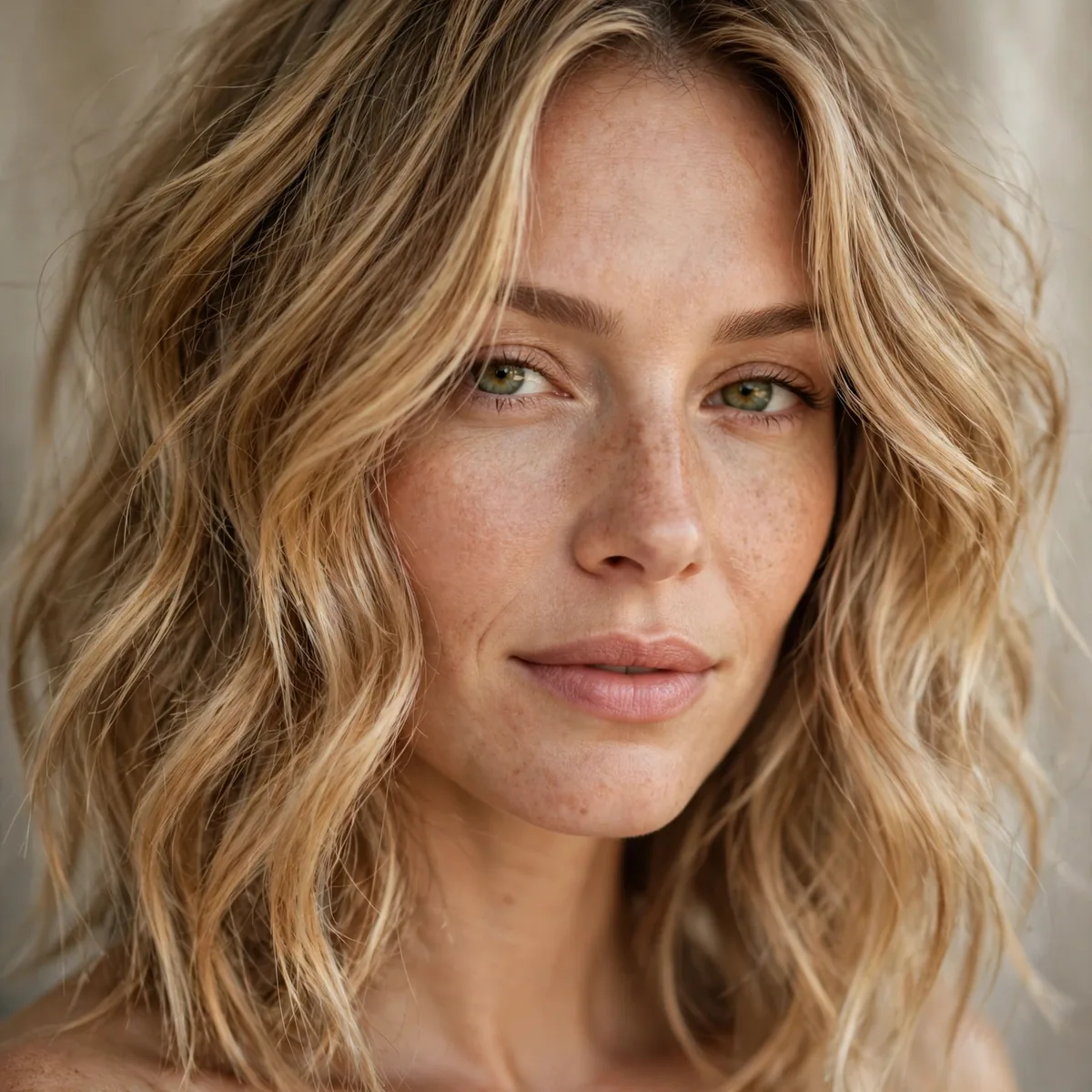
Lived-in blonde was practically invented for fine hair that can't handle constant bleaching. Your colorist hand-paints honey and caramel ribbons through the mid-lengths, deliberately leaving your natural base — usually a dark blonde or light brown — as the lowlight. That untouched depth between the blonde ribbons is what creates the illusion of thickness, because fine hair in a single flat shade looks exactly as thin as it is.
The honey tone is doing quiet work here too. Warm golds reflect light differently than icy platinum, scattering it across the strands so hair looks plush rather than stringy. This is the balayage to choose if your skin has golden or olive undertones; the warmth in the hair echoes the warmth in your face. Wear it with loose, brushed-out waves — the kind you get from sleeping in two loose braids overnight — and the ribbons blur into a sun-warmed sheet of color.
Because this is a low-lift technique, the appointment is faster and cheaper than a full foil. Most colorists can refresh lived-in blonde with a partial balayage in under two hours. The grow-out is the gentlest of any blonde on this list: since the roots were never lifted, there's no harsh line, just a slow softening that still looks intentional at month four. It's the ideal entry point if you're going blonde for the first time.
At home, keep the honey rich with a sulfate-free color-safe shampoo and a weekly mask with shea butter to keep fine strands supple. Fine hair shows damage fast, so turn down the heat — a medium setting on your flat iron for touch-ups is plenty. A dry-texture spray at the roots before an event gives the crown instant lift, and the honey ribbons do the rest of the visual work.
Cool Champagne Babylights Balayage
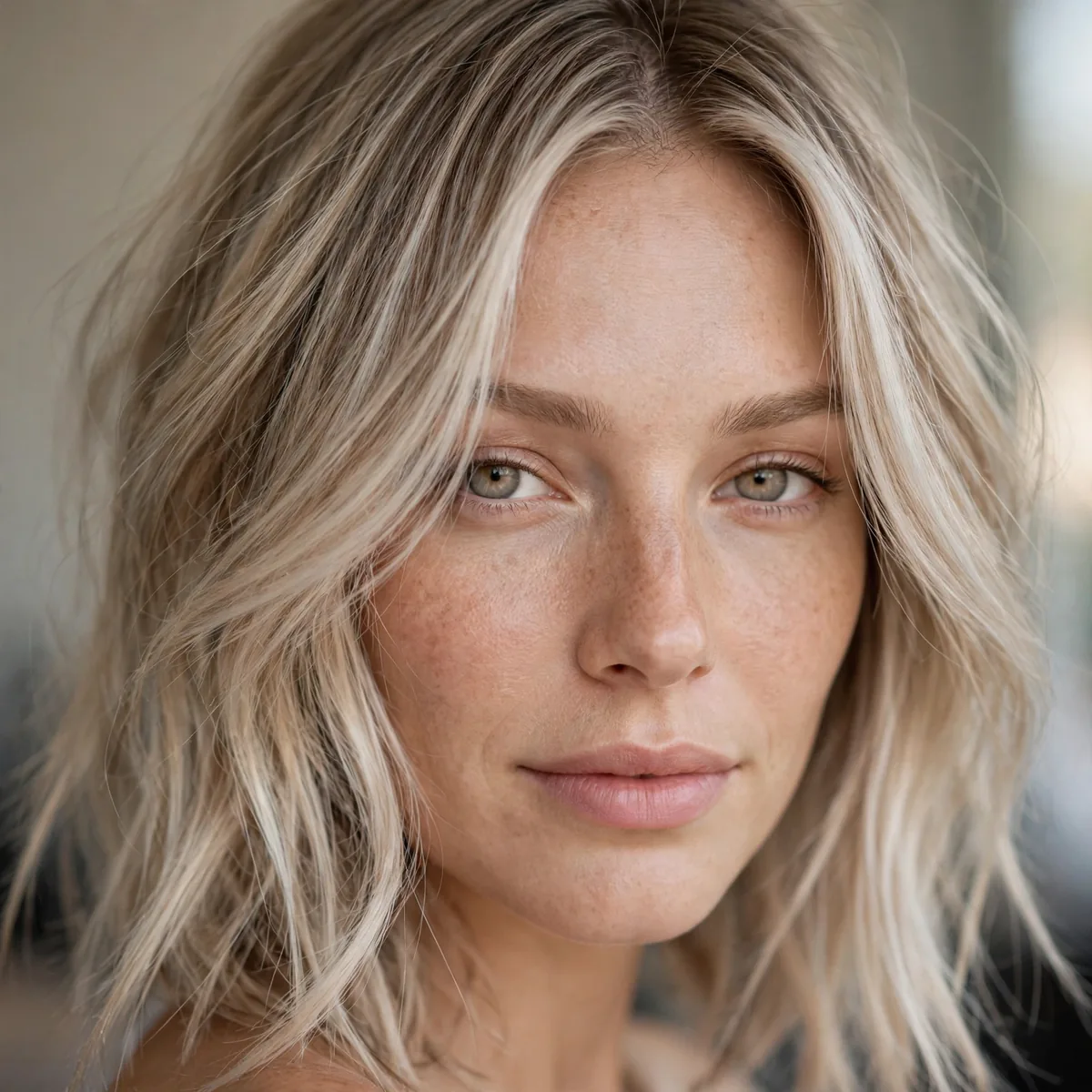
Babylights plus balayage is the detail-oriented colorist's answer to fine hair. Super-fine weaves of champagne blonde are painted in a balayage technique — starting a few inches from the root — so you get the brightness of highlights with the soft grow-out of balayage. The multitude of tiny light pieces tricks the eye into seeing more hair than there is, like pointillism for your head. It's intricate, it's luminous, and it photographs like a dream.
Champagne is a cool-leaning blonde with a whisper of warmth, which makes it wearable for fair and light-medium skin tones that wash out in platinum but go sallow in gold. The cool tones also make fine hair look cleaner and more expensive, especially when paired with a glossy finish. Style it with a round brush blowout — even a quick one with a paddle brush and dryer — because smooth, tucked-under ends make the champagne dimension read as polished rather than messy.
This is a salon-heavy service, so budget for a longer appointment and a skilled colorist. Babylights require precision sectioning, and the balayage painting on top demands an artist's eye. But the payoff is a blonde that grows out beautifully: the fine weaves mean no chunky stripes ever appear, and the balayage placement keeps the roots looking natural. Most wearers go twelve to sixteen weeks between full sessions with just a toner refresh in between.
Protect the investment with a purple shampoo every third wash — champagne can drift warm on fine hair, which shows every tonal shift. A lightweight leave-in with hyaluronic acid keeps strands hydrated without weighing them down, which is the cardinal rule for fine hair care. Avoid heavy oils at the root; if you need shine, press a drop of argan oil only through the last three inches.
Caramel Face-Frame Balayage
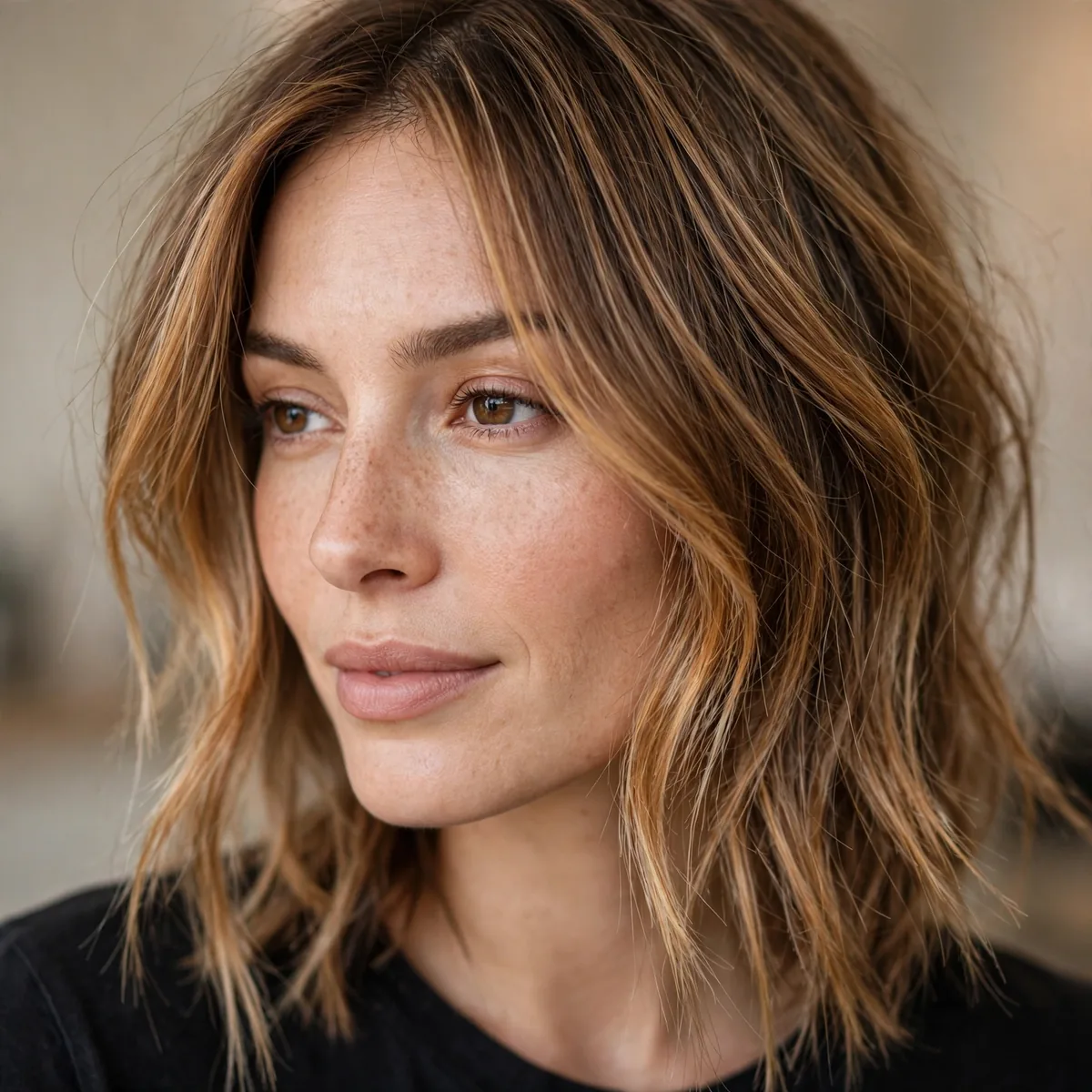
Face-framing balayage puts the brightness exactly where it matters: the two inches of hair that frame your face. Your colorist paints caramel ribbons along the front hairline and the money-piece sections, keeping the back softer and more natural. For fine hair, this is genius economics — you get maximum visual impact with minimal bleaching, and the brightness around your face draws attention upward, making your whole head of hair look fuller by association.
Caramel flatters medium to deep skin tones and warm complexions beautifully, wrapping fine strands in a glossy, expensive-looking glow. The technique also suits every face shape: on round faces, longer face-framing pieces elongate; on heart-shaped faces, brightness at the cheekbones balances a narrower chin. Wear it straight for a sleek, editorial look, or add soft waves — the caramel pieces will catch light differently in every bend.
Because only the front is significantly lifted, damage risk stays low, which fine hair will thank you for. The back of the hair keeps its natural strength and color, so the overall integrity of your hair stays high. This also makes it one of the most affordable balayage options — many salons offer it as a partial service. Regrowth is soft because the back was never dramatically lightened; only the front needs periodic brightening, roughly every eight to ten weeks.
Styling is simple: the face frame does the talking. Tuck one side behind your ear to show off the caramel contrast against your deeper base — it's a styling trick that instantly doubles the dimensional look. Use a heat protectant before any iron work, since the lightened front pieces are the most fragile. A color-depositing gloss in caramel once a month keeps the tone rich between appointments.
Sandy Blonde Color Melt
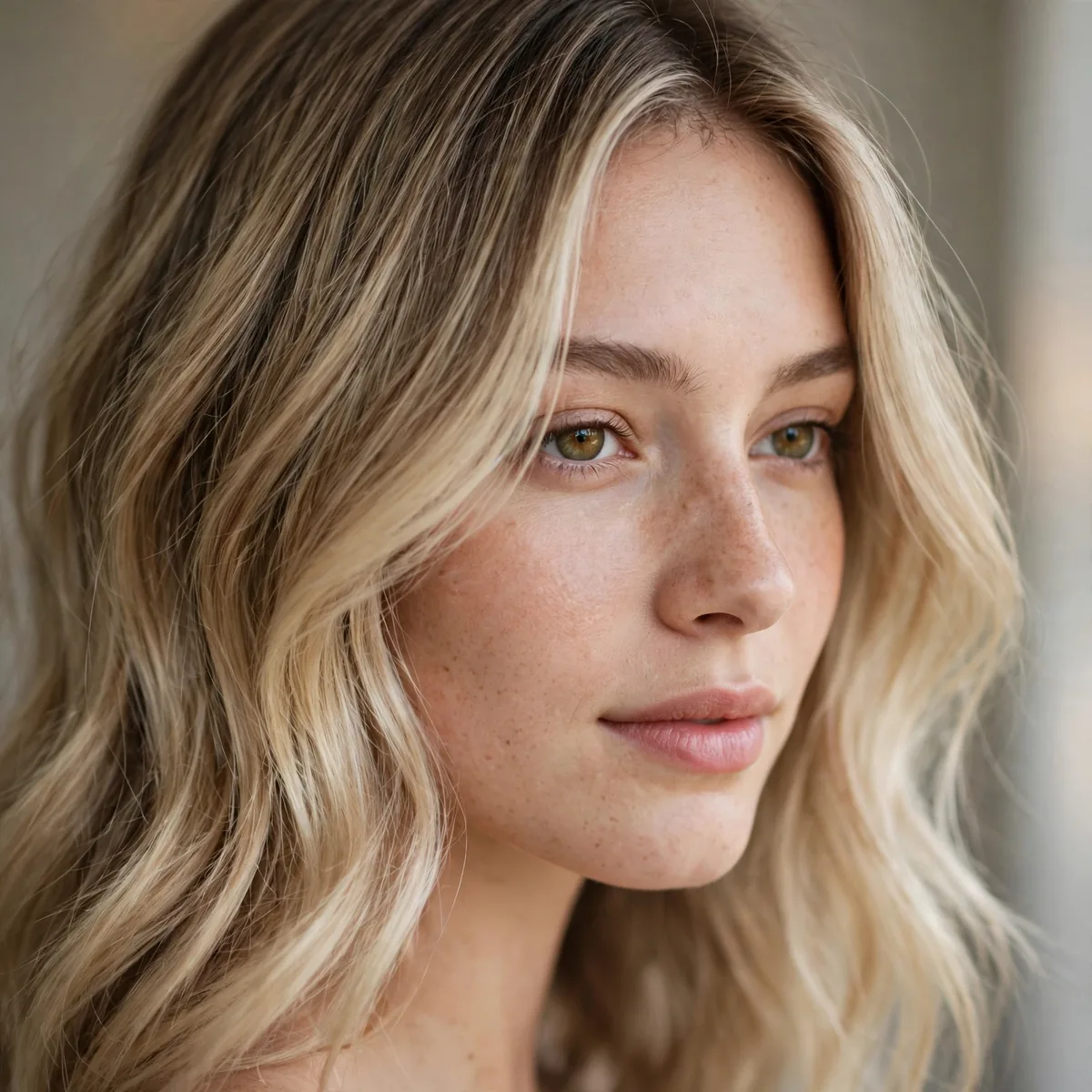
A color melt takes balayage one step further by blending three tones — root, mid-length, end — into one continuous gradient with no visible starting point. For fine hair, the sandy blonde version is perfection: a natural dark-blonde root melts into sunlit sand through the lengths and brightens to a soft, beachy blonde at the tips. Because there are no lines anywhere, the hair reads as one thick, flowing sheet of color rather than separate thin pieces.
Sandy blonde is the most natural-looking blonde on this list, which makes it ideal if you want compliments that sound like people think it's your real hair. It suits fair to medium skin with neutral undertones and looks especially good with a little natural wave or texture. The melt technique also means zero maintenance anxiety — the gradient is so soft that grow-out is literally invisible, and you can go four months between appointments without anyone noticing.
Ask your colorist specifically for a melted root in a level 7 or 8 sandy shade, with the balayage ribbons starting lower than usual — around the cheekbone or chin. This lower start point is key for fine hair: it keeps the top looking dense and natural while the brightness lives where the hair has more length to show it off. A gloss toner in a sandy beige seals the cuticle and adds the shine that makes fine hair look healthy.
At home, embrace air-drying to preserve the melt's softness. Scrunch in a lightweight mousse while damp, then let a diffuser on low heat finish the job if you need volume. Sandy blonde can look dull if it gets brassy, so a blue or purple shampoo used sparingly — once every two weeks — keeps the tone clean. The less you fuss with it, the better this color looks.
Golden Wheat Dimensional Blonde
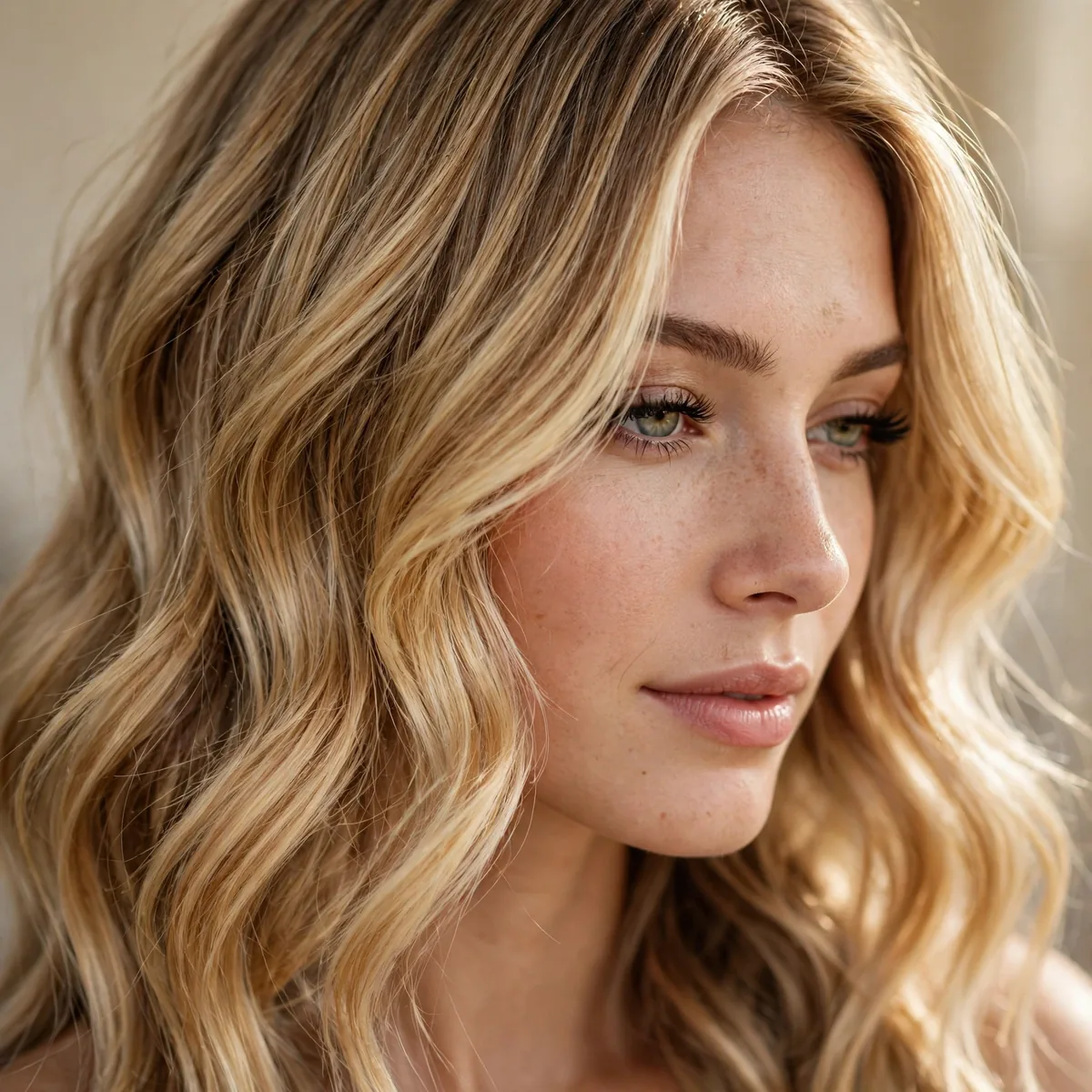
Golden wheat blonde is warmth done right — rich, buttery, and dimensional rather than brassy. Your colorist weaves together three golden tones: a deeper wheat at the root, a mid-gold through the lengths, and a bright champagne-wheat at the ends. On fine hair, this tonal layering is everything. Each shade catches light at a different angle, so even pin-straight fine hair looks like it has movement and body it doesn't actually possess.
This is the blonde for warm and golden skin tones, and it's particularly flattering in autumn and winter when the golden tones echo the season's light. Wheat blonde also has a youthful quality — the warmth softens fine lines around the face in a way cool blondes can't. Style it with big, loose waves using a one-and-a-quarter-inch iron; the wider the wave, the more surface area the golden tones have to shimmer across. Brush the waves out with a boar-bristle brush for expensive, old-Hollywood fullness.
Golden tones are lower maintenance than cool blondes because they fade gracefully — warmth fading to warmth is invisible, while ash fading to warmth looks brassy. You'll still want a gloss refresh every eight weeks to keep the dimension crisp, but the grow-out is forgiving. Ask your colorist to keep the root within two levels of your natural color; the closer the root, the longer you can stretch appointments and the less lifting your fine hair endures.
Fine hair and golden blonde both love moisture, so make a weekly deep-conditioning mask non-negotiable. Look for formulas with argan oil and keratin — they fill in the slightly raised cuticle of color-treated fine hair, making strands look plumper. Sleep on a silk pillowcase to prevent the friction that makes fine blonde look frizzy and thin by morning.
Icy Platinum Tip Balayage
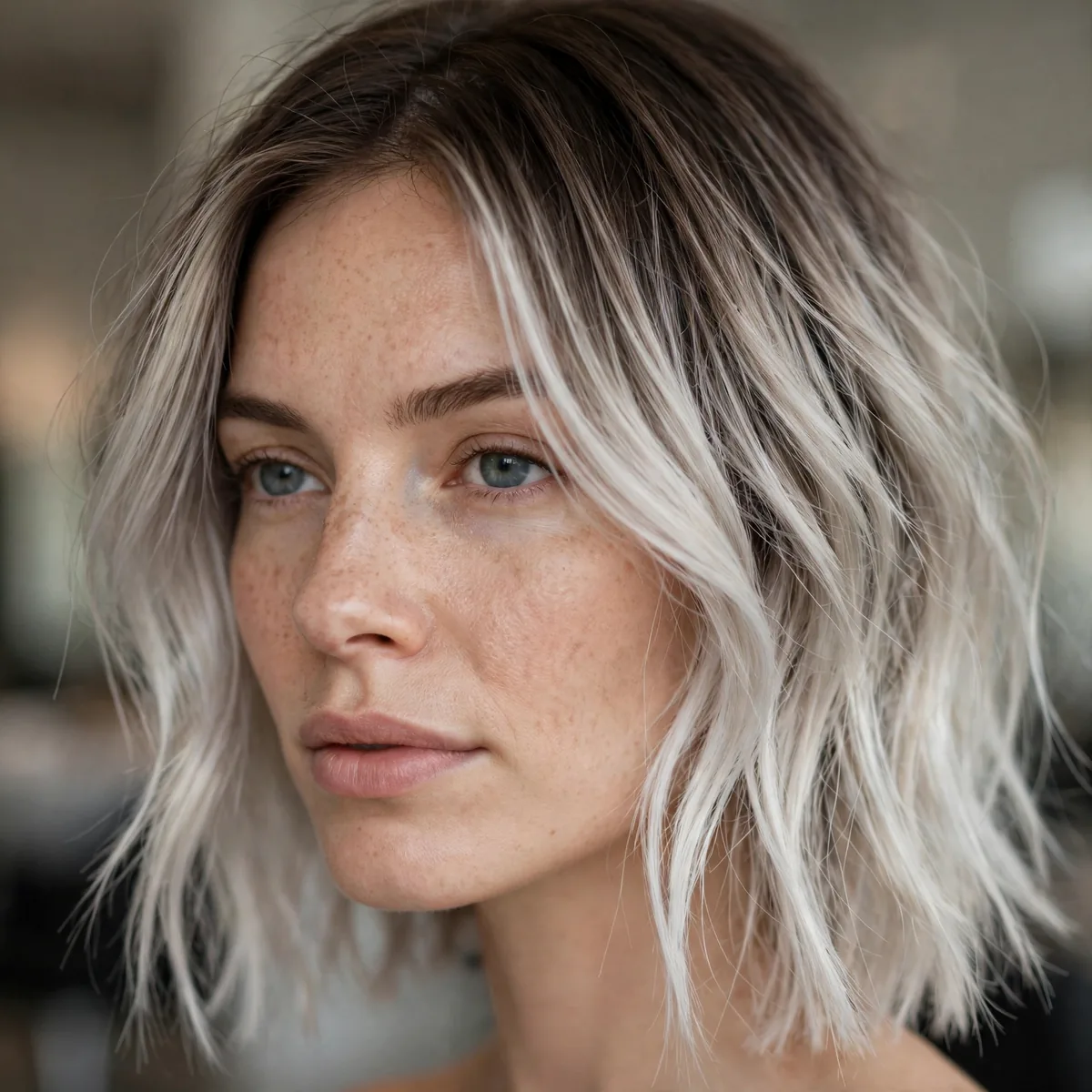
Platinum tips on a darker root give fine hair the boldest dimensional contrast on this list — and contrast is what creates the illusion of volume. Your colorist keeps your natural base (or a smudged root close to it) through the top half, then paints the bottom half to a bright, icy platinum. The stark light-dark shift makes the eye perceive two distinct layers of hair, which reads as twice the density. It's dramatic, modern, and surprisingly wearable.
This look demands confidence and a good purple shampoo, but it rewards both. Icy platinum flatters cool and fair skin tones most, though it can work on deeper skin when the root is kept rich and the platinum is clean rather than yellow. Keep the platinum section glossy — dull platinum on fine hair looks thin, while glassy platinum looks intentional and luxe. A flat-iron finish with a shine serum makes the icy ends look like liquid metal.
Be honest with your colorist about your hair's history, because platinum requires significant lifting and fine hair is more fragile. A bond-builder added to the lightener is non-negotiable, and many colorists will do this in two sessions to protect fine strands. The payoff for the patience is a root that needs almost no maintenance — since the top is your natural color, you only refresh the platinum toner every six to eight weeks and trim the ends regularly.
At home, purple shampoo is your religion — use it weekly to keep the icy tone from yellowing. Follow every wash with a protein-moisture balancing treatment, because platinum fine hair needs both strength and softness. Never skip heat protectant; platinum ends are the most vulnerable part of your hair. A silk scarf at night prevents tangles that snap fragile lightened ends.
Buttery Blonde with Lowlight Depth
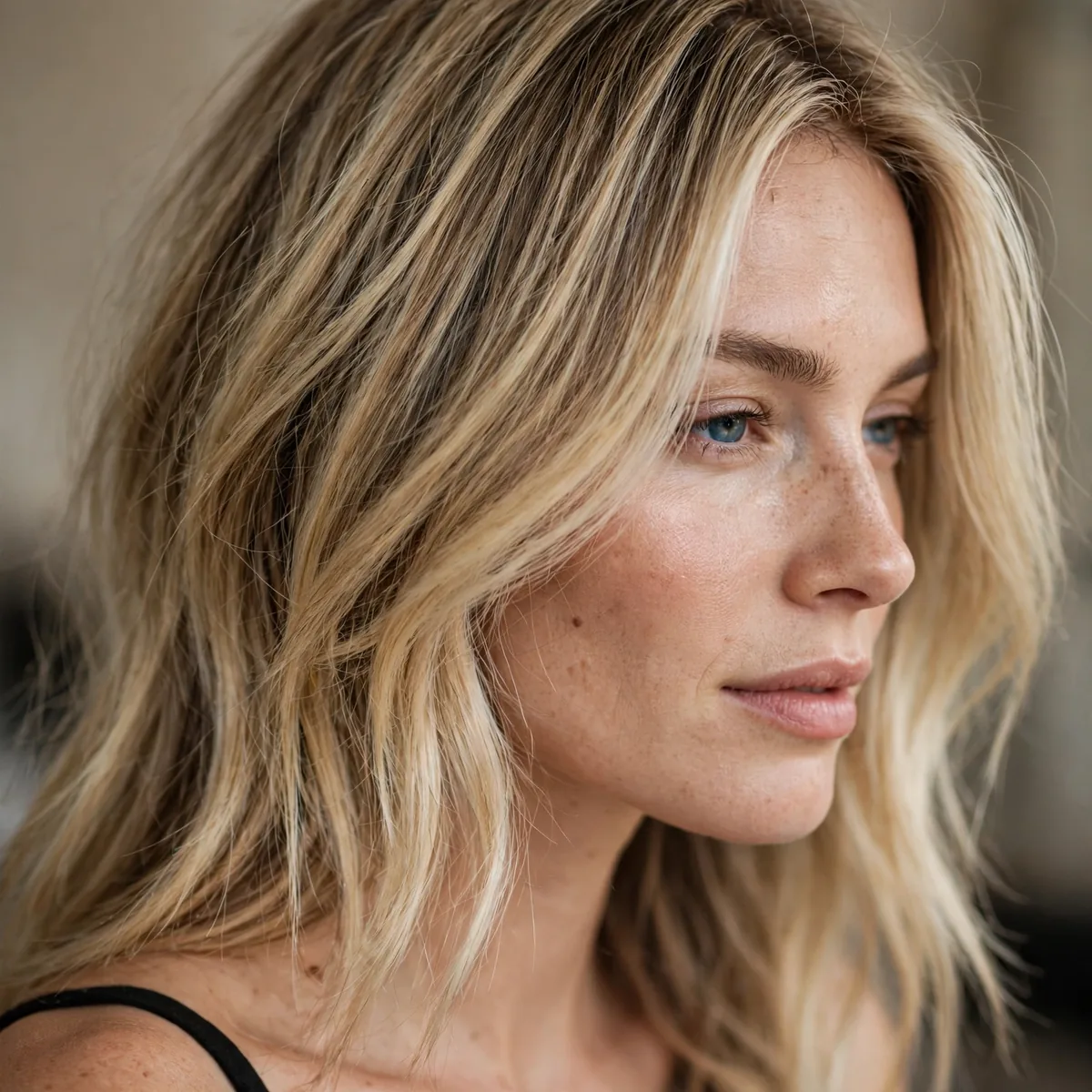
Sometimes the secret to looking blonder is adding brown back in. This technique pairs a buttery blonde balayage with strategically placed lowlights — thin ribbons of your natural darker shade woven through the mid-lengths. On fine hair, lowlights are transformative: they create the shadow between the light pieces, and that shadow is what the eye reads as separate, plentiful strands. Without lowlights, all-over blonde on fine hair can look flat and one-dimensional; with them, it looks rich and full.
Buttery blonde is a warm, creamy shade that flatters fair to medium warm skin tones and looks gorgeous in natural daylight. The lowlights should sit no more than two levels darker than the blonde — think a soft toffee or dark honey — so the contrast stays sophisticated rather than stripey. This is also the most forgiving option for hair that's been over-lightened in the past, because the lowlights restore the depth that makes hair look healthy again.
Wear it with texture: beachy waves, a tousled lob, or even a messy bun all show off the light-dark interplay. The lowlights peek through the blonde in every twist and bend, multiplying the dimensional effect. For straight styles, a sleek blowout with the ends flipped slightly under makes the ribbons lie in clean, visible layers. Either way, the color does the volumizing work — your styling just reveals it.
Maintenance is moderate: the lowlights fade faster than the blonde, so ask for a demi-permanent formula that washes out softly rather than leaving lines. A gloss appointment every eight weeks refreshes both tones at once. At home, alternate between a moisturizing shampoo and a gentle clarifying one — fine hair with lowlights needs clean roots for volume but hydrated ends for shine.
Rose Gold Blush Balayage
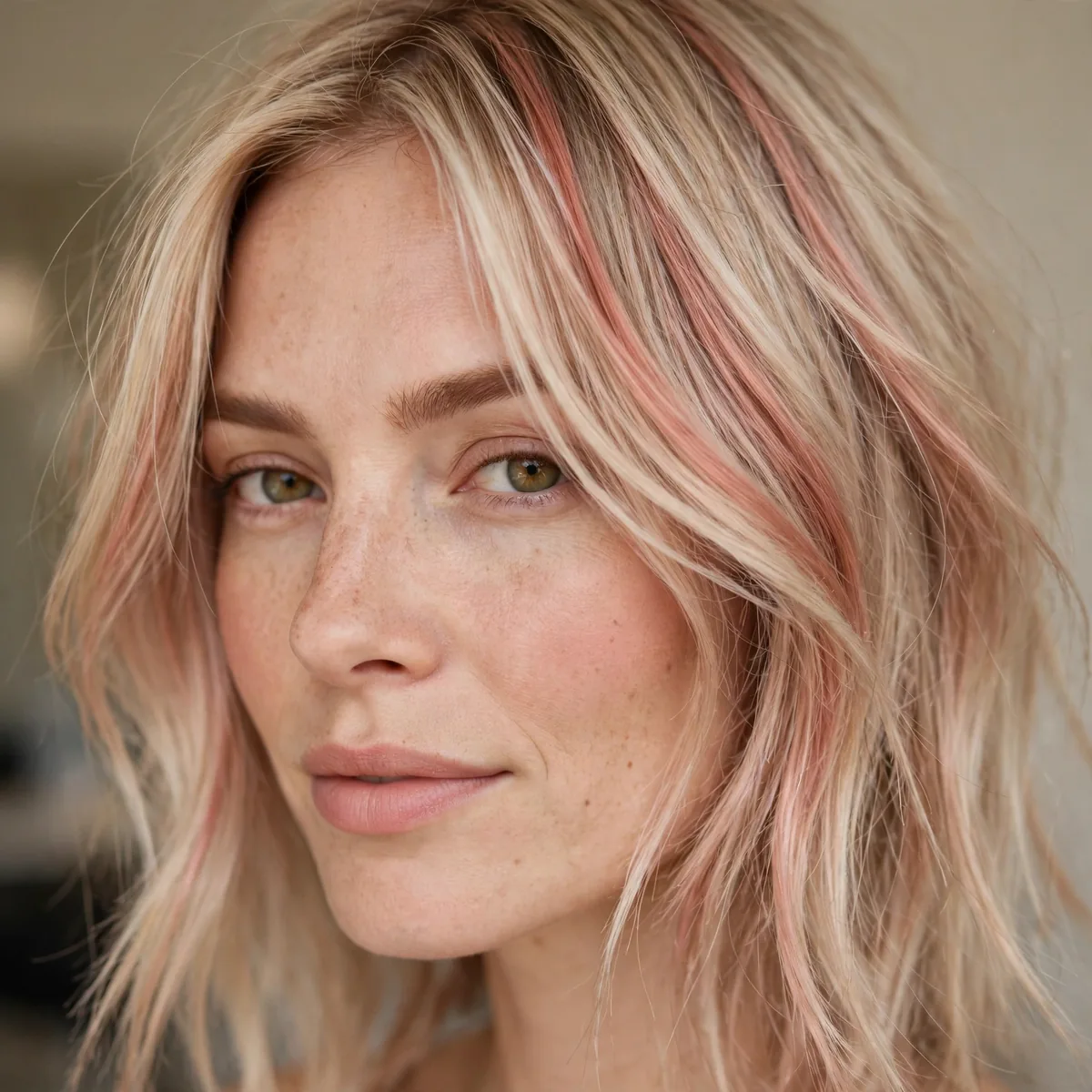
Rose gold balayage is blonde with a romantic twist — a sheer wash of pink-gold painted over a blonde balayage base. On fine hair, the rosy tone adds a luminous warmth that makes strands look plumper and more light-reflective than flat blonde alone. The pink undertone also brightens the complexion, giving cheeks a lit-from-within flush that pairs beautifully with the hair color. It's playful, feminine, and far more wearable than it sounds.
The key to sophisticated rose gold is restraint: it should read as a blush, not a dye job. Your colorist achieves this by applying a demi-permanent rose gold gloss over pre-lightened balayage, concentrating the pink through the mid-lengths and ends. On fair to light-medium skin with cool or neutral undertones, the effect is ethereal. Style it with soft, romantic waves — the pink catches light in every curve, making fine hair look like it's glowing.
Rose gold is semi-permanent by nature, which is actually a plus for fine hair: no harsh grow-out, just a gentle fade back to blonde over four to six weeks. That means you can try the trend with zero commitment. Ask for the gloss in a muted, dusty rose rather than a bright pink — the dustier tone fades more gracefully and looks more expensive. Refresh the gloss whenever the pink softens, or let it fade to a pretty champagne blonde.
To extend the rose tone, wash with cool water and a sulfate-free shampoo, and limit washing to two or three times a week — every wash lifts a little pink. A color-depositing conditioner in rose gold once a week tops up the tone at home. Keep heat styling moderate, since high heat fades fashion tones fast; when you do style, a light hold spray protects the color and adds grip for fine strands.
Ash Blonde Shadow Root Balayage
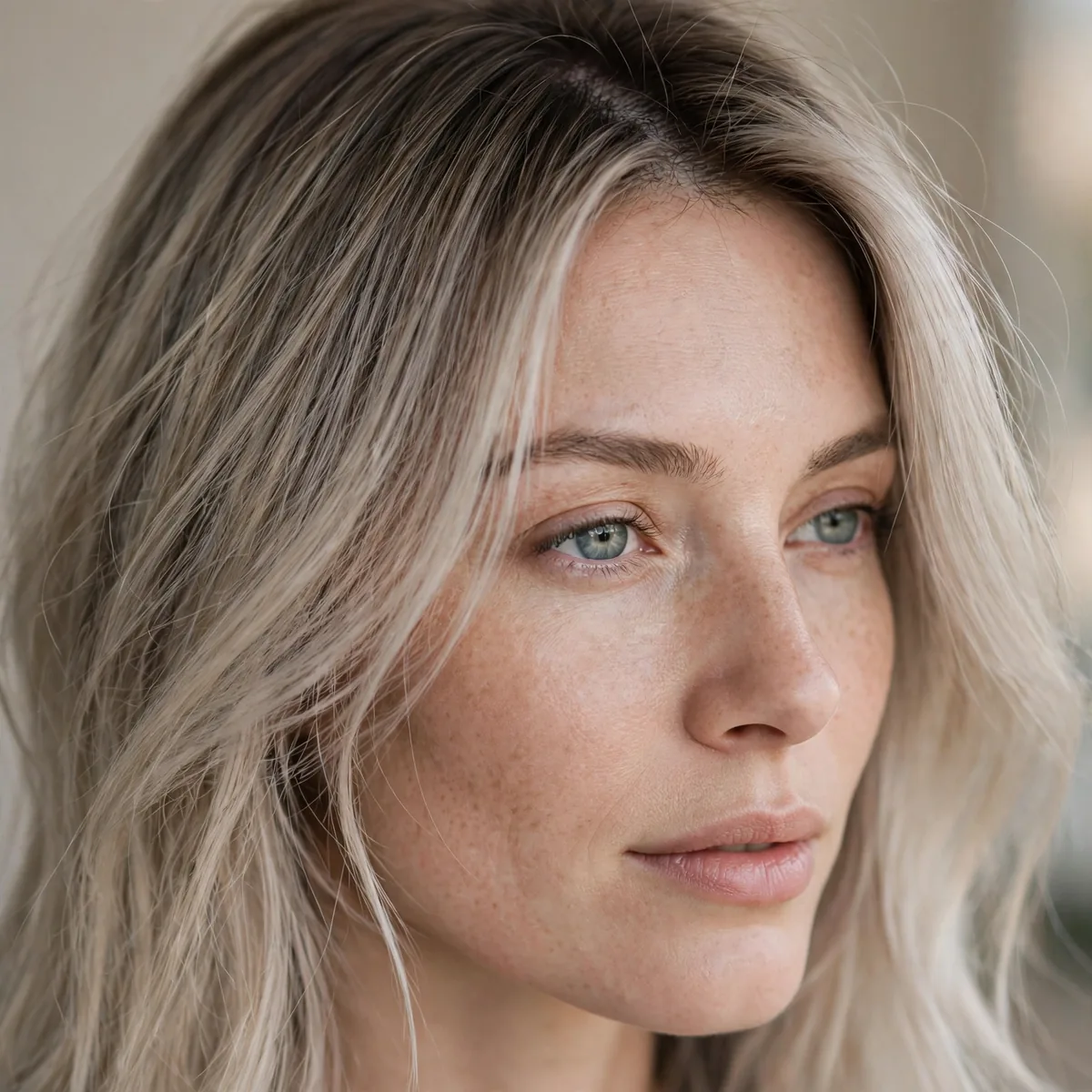
A shadow root takes the root smudge concept deeper — literally. Your colorist applies a cool brown or dark ash blonde to the first three to four inches, then blends it into an ash blonde balayage through the lengths. For fine hair, this deep root is a volume cheat: the dark-to-light gradient creates maximum contrast at the crown, and the eye interprets that contrast as density. It's the edgiest, most modern blonde on this list, and it grows out like an absolute dream.
Ash blonde flatters cool skin tones and looks striking with blue or green eyes — the cool tones make eye color pop. The shadow root also means this is one of the lowest-maintenance blondes possible: the dark root is close to most natural bases, so regrowth blends seamlessly for months. Wear it with lived-in texture — air-dried waves with a salt spray, or a deliberately undone bun — because the shadow root looks best when the overall vibe is effortless rather than polished.
The ash tone needs protection to stay ash. Fine hair grabs tone quickly but loses it just as fast, so a purple shampoo used correctly (once a week, left on for three to five minutes) is essential. Ask your colorist for a toner with a violet-blue base to neutralize the underlying warmth that fine hair exposes during lifting. A gloss refresh every eight to ten weeks keeps the ash from drifting muddy.
Styling tip: the shadow root looks best with volume at the crown, so flip your head upside down while blow-drying the roots, or use a root-lifting spray before drying. The dark root plus lifted crown is the combination that makes fine hair look genuinely thick. Avoid heavy serums near the root — they'll collapse the lift that makes this look work.
Mushroom Blonde Dimensional Balayage
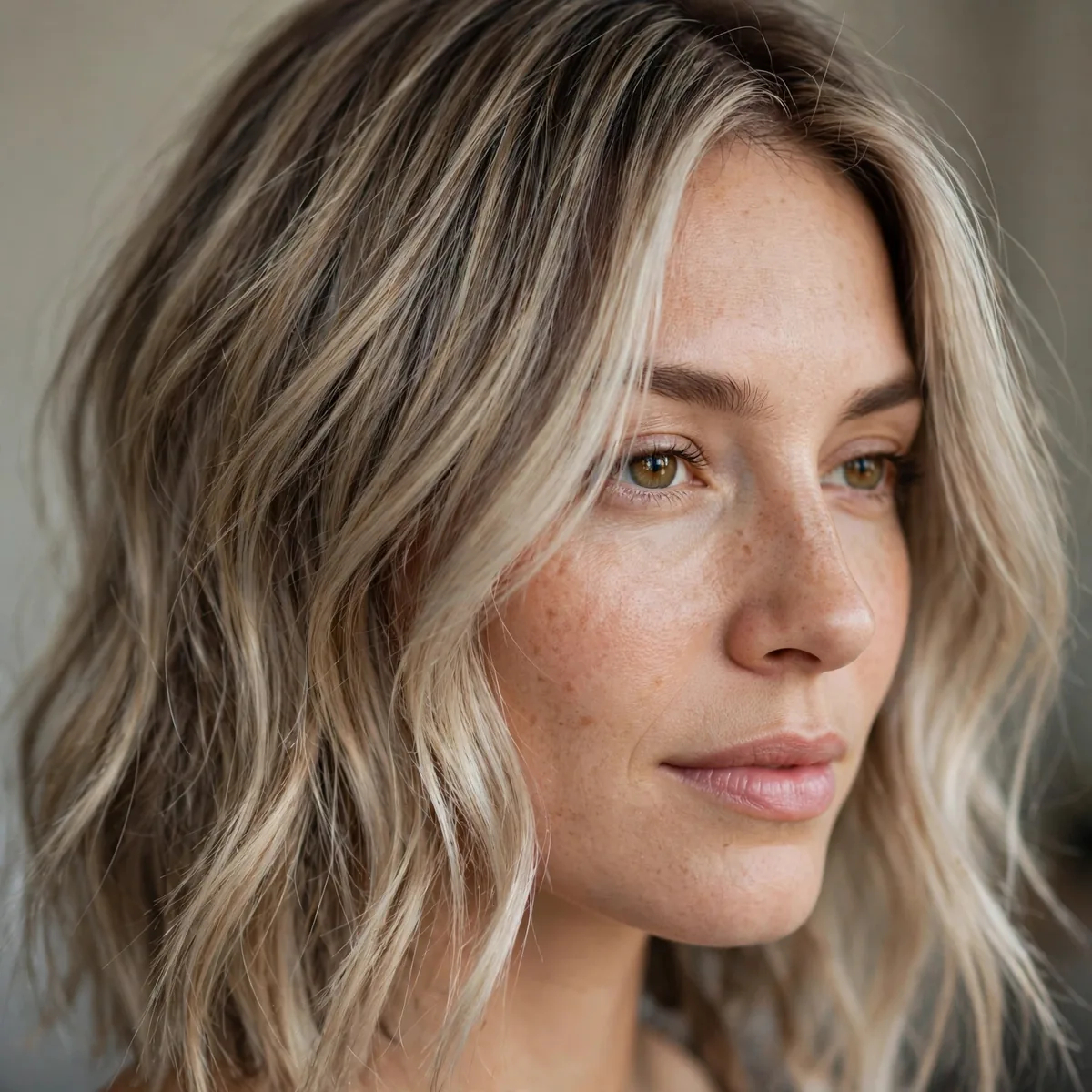
Mushroom blonde is the cool girl's answer to brassy blonde — a smoky, ashy blend of beige, gray, and light brown that looks like the forest floor in the best way. On fine hair, the multi-tonal smokiness is a secret weapon: the interplay of cool beige and soft taupe creates incredible depth, and depth is what makes thin hair look thick. It's understated, modern, and endlessly chic.
This shade flatters cool and neutral skin tones, especially fair complexions that go sallow in warm blonde. Mushroom blonde also has a softening effect — the ashy tones diffuse harsh light on the hair, so fine strands look smooth and uniform rather than wiry. Wear it with a sleek, straight finish to show off the smoky dimension, or with loose waves for a more lived-in feel. Either way, the color's complexity does the visual heavy lifting.
Mushroom blonde requires a skilled colorist because the tone is a precise balance — too much ash and it goes gray and dull, too little and it drifts brassy. Ask for a toner with both violet and blue-violet pigments, and request a see-through formula so your natural depth shows through. The balayage placement should be soft and diffused rather than bold; mushroom blonde is about overall tone, not contrast. Maintenance is a toner refresh every eight weeks and purple shampoo used sparingly.
At home, protect the smoky tone from heat, which pushes ash blonde warm — always use a heat protectant and keep irons at medium heat. A clear gloss treatment once a month restores the glassy finish that makes mushroom blonde look expensive, and pair it with a blunt or softly layered cut: blunt ends make fine hair look instantly thicker, and the smoky color on a clean perimeter reads as intentional and editorial.
Sun-Kissed Golden Balayage for Summer
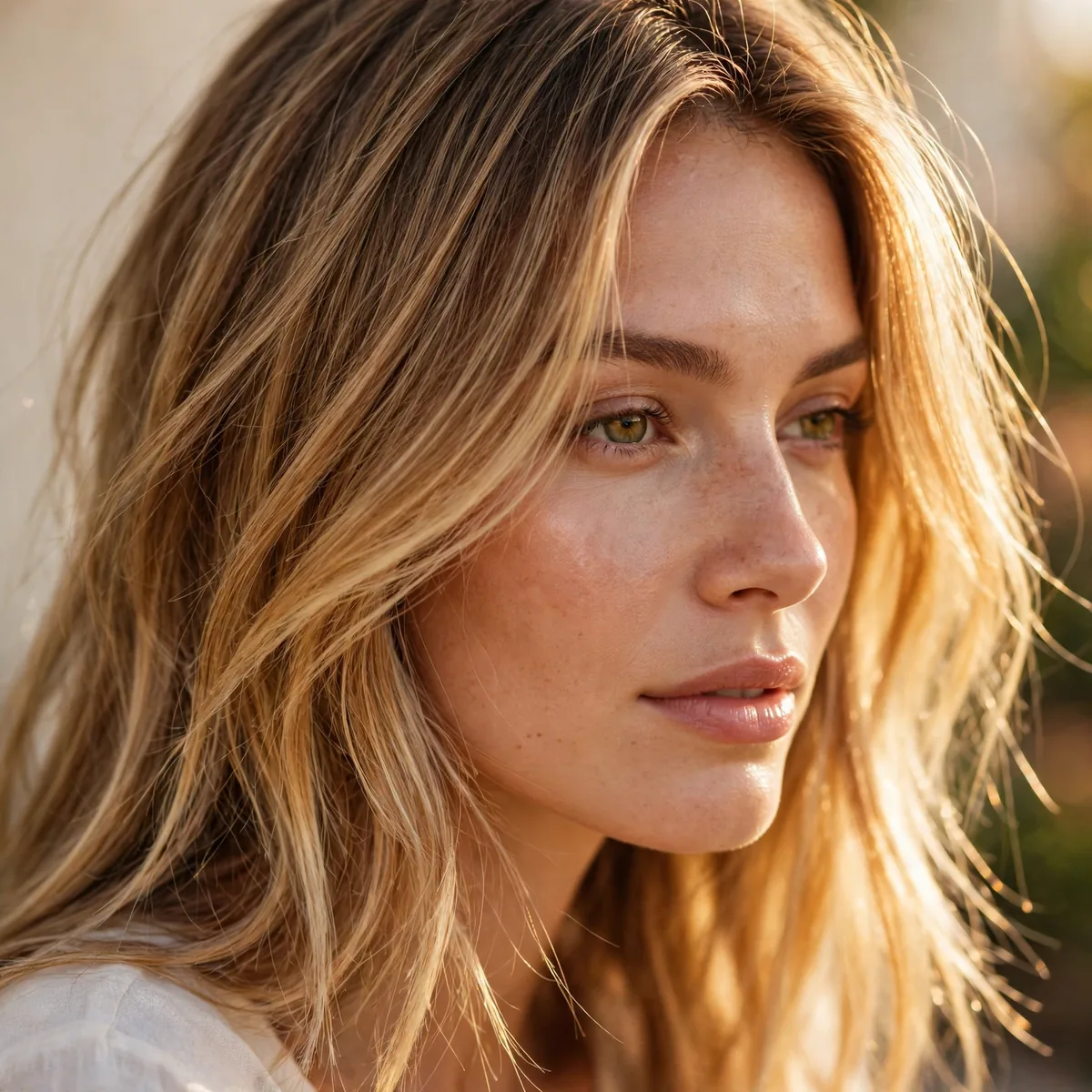
Sun-kissed balayage mimics what childhood summers did to your hair — bright, golden pieces concentrated where the sun would naturally hit: the crown, the part, and the ends. For fine hair, this placement is strategic genius. Brightness at the crown and part draws the eye to the top of the head, creating the impression of fullness exactly where fine hair usually looks thinnest. The golden tone adds warmth and light-reflection that makes every strand look glossier.
This is the most natural-looking blonde on the list, ideal if you want people to think you just got back from vacation. It suits warm and neutral skin tones and looks best with texture — beach waves, air-dried bends, or a tousled ponytail all amplify the sun-kissed effect. The colorist's technique matters here: the pieces should be fine and feathered, painted in a way that looks random rather than patterned. Ask to see photos of their lived-in blonde work before committing.
Because the lift is minimal — often just one to two levels — this is the gentlest balayage for fine hair. Many colorists can achieve it with a high-lift tint rather than bleach, which is dramatically kinder to delicate strands. The grow-out is completely invisible, and you can easily go four to six months between appointments. It's also the most affordable option, since it requires the least product and time.
Summer sun will naturally brighten this color further, so protect it with a UV-protectant hair spray if you spend time outdoors — sun fades toner and dries fine hair fast. A weekly hydrating mask keeps the golden pieces supple, and a lightweight sea-salt spray on damp hair gives you those vacation waves without heat. This is the wash-and-go blonde that actually works.
Bronde Balayage for Natural Depth
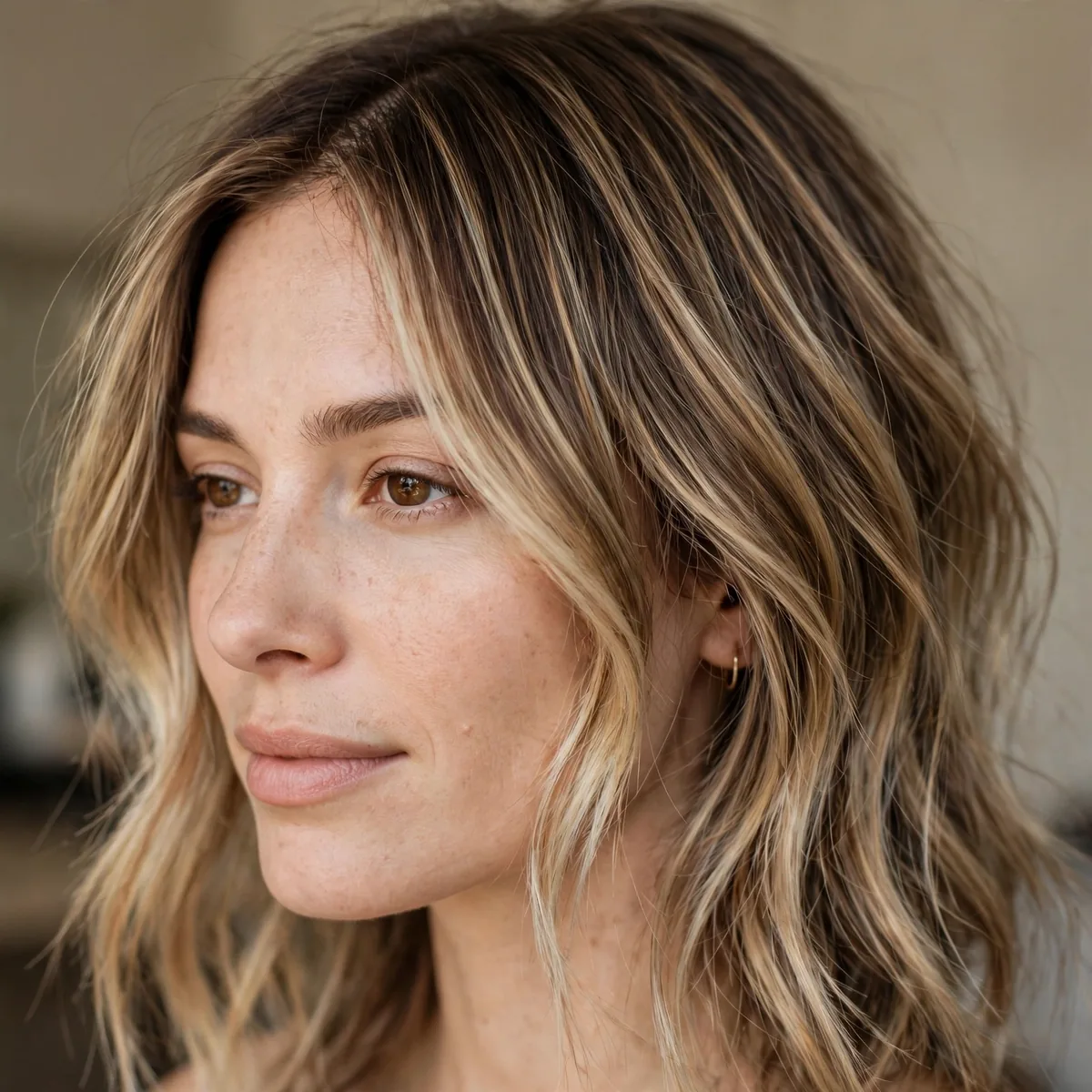
Bronde — the perfect marriage of brown and blonde — might be the smartest color choice for fine hair, period. By keeping the base a rich brunette and painting blonde balayage through the mid-lengths and ends, you get the best of both worlds: the depth of brown makes hair look thick, while the blonde ribbons add the light and movement that keep it from looking flat. It's dimension in its most flattering form.
Bronde flatters nearly every skin tone because it's inherently balanced — not too warm, not too cool, not too light, not too dark. For fine hair specifically, the brunette base is doing critical work: dark colors recede visually, which sounds bad, but here it means the darker pieces create shadow between the blonde ribbons, and that shadow reads as separate strands and fullness. It's the same principle as contouring for your hair.
This is also one of the most low-maintenance colors on the list. The base is close to most natural hair colors, so regrowth is a non-issue, and the blonde only needs brightening two or three times a year. Ask your colorist for a balayage that starts at the mid-shaft and gets progressively brighter toward the ends — the classic bronde gradient. A gloss in a neutral beige every couple of months keeps both tones harmonious.
Style bronde with shine as the priority, because glossy hair always looks thicker than dull hair. A smoothing cream on damp hair followed by a blowout with a round brush gives you that expensive, swishy finish. For fine hair, a clear shine spray on dry hair (lightly, mid-lengths to ends) amplifies the dimensional effect without weighing anything down.
Pearl Blonde Gloss Balayage
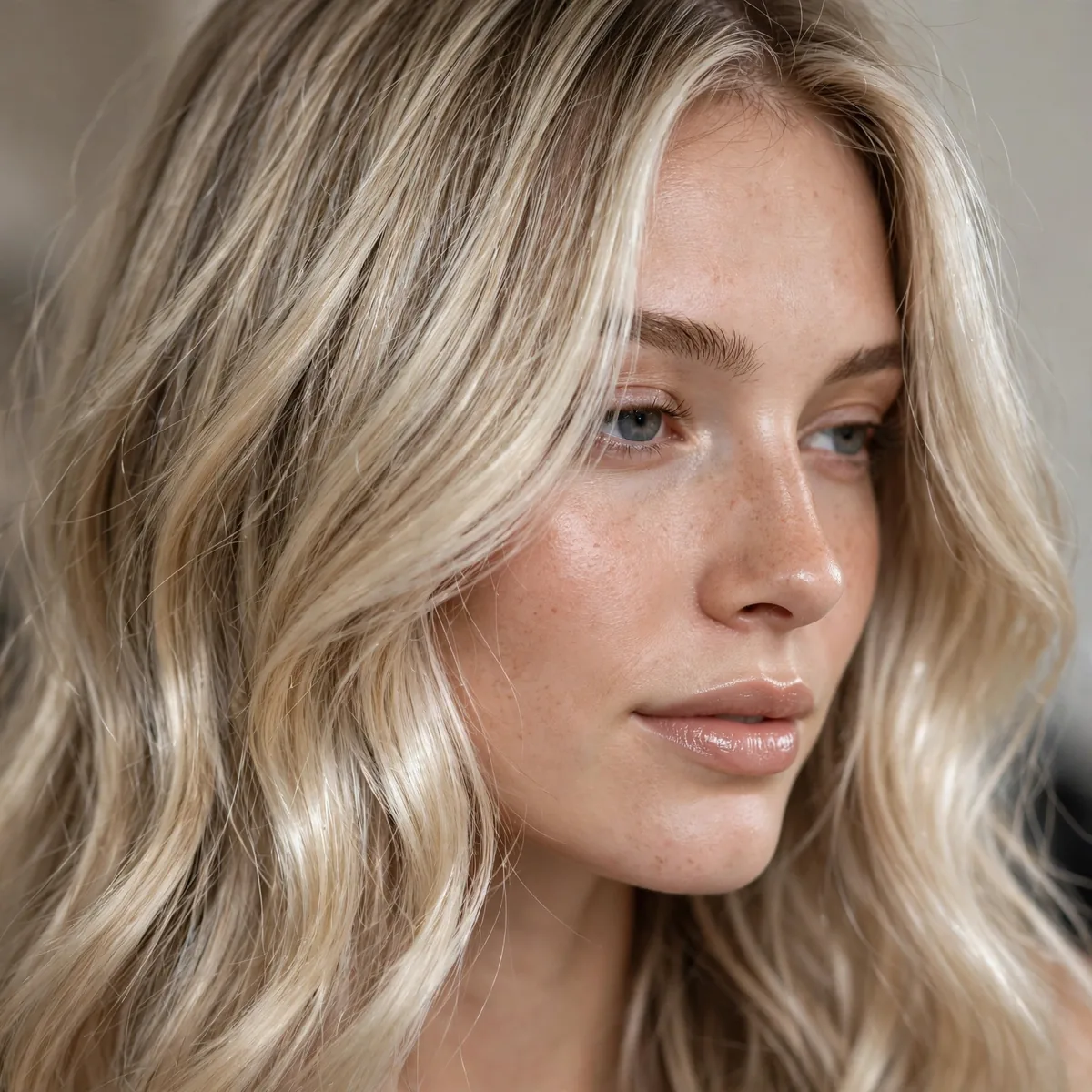
Pearl blonde is blonde with a jewelry-box finish — cool, luminous, and kissed with the faintest iridescence, like the inside of a seashell. On fine hair, that pearlescent quality is transformative: the multi-dimensional shimmer makes every strand catch light differently, creating a halo effect that reads as volume. It's the most light-reflective blonde on this list, and light reflection is fine hair's best friend.
The pearl tone comes from a toner with violet and a whisper of pink iridescence, applied over a well-lifted balayage. It flatters fair to light-medium cool skin tones and looks stunning with gray or blue eyes. Because the finish is so luminous, pearl blonde looks best with polished styling — a smooth blowout, sleek straight hair, or defined glossy waves. The smoother the surface, the more dramatic the pearl effect.
Achieving pearl requires hair lifted to a clean level 9 or 10, so this is a bigger lift for fine hair — insist on a bond-builder and consider doing it in stages. The pearl toner itself is gentle (it's just a gloss), but the underlying lift needs care. Once you're there, the pearl fades softly over six to eight weeks into a pretty champagne blonde, so there's no ugly grow-out phase — just a gradual softening.
Maintain the pearl with purple shampoo once a week and cool-water rinses, which seal the cuticle and lock in the iridescent tone. A shine-enhancing leave-in with light-reflecting particles (not glitter — micro-shine) amplifies the pearl effect between washes. Keep heat tools at medium and always use protectant; high heat yellows cool blondes fast, and yellow is the enemy of pearl.
Toffee Swirl Balayage on Dark Blonde
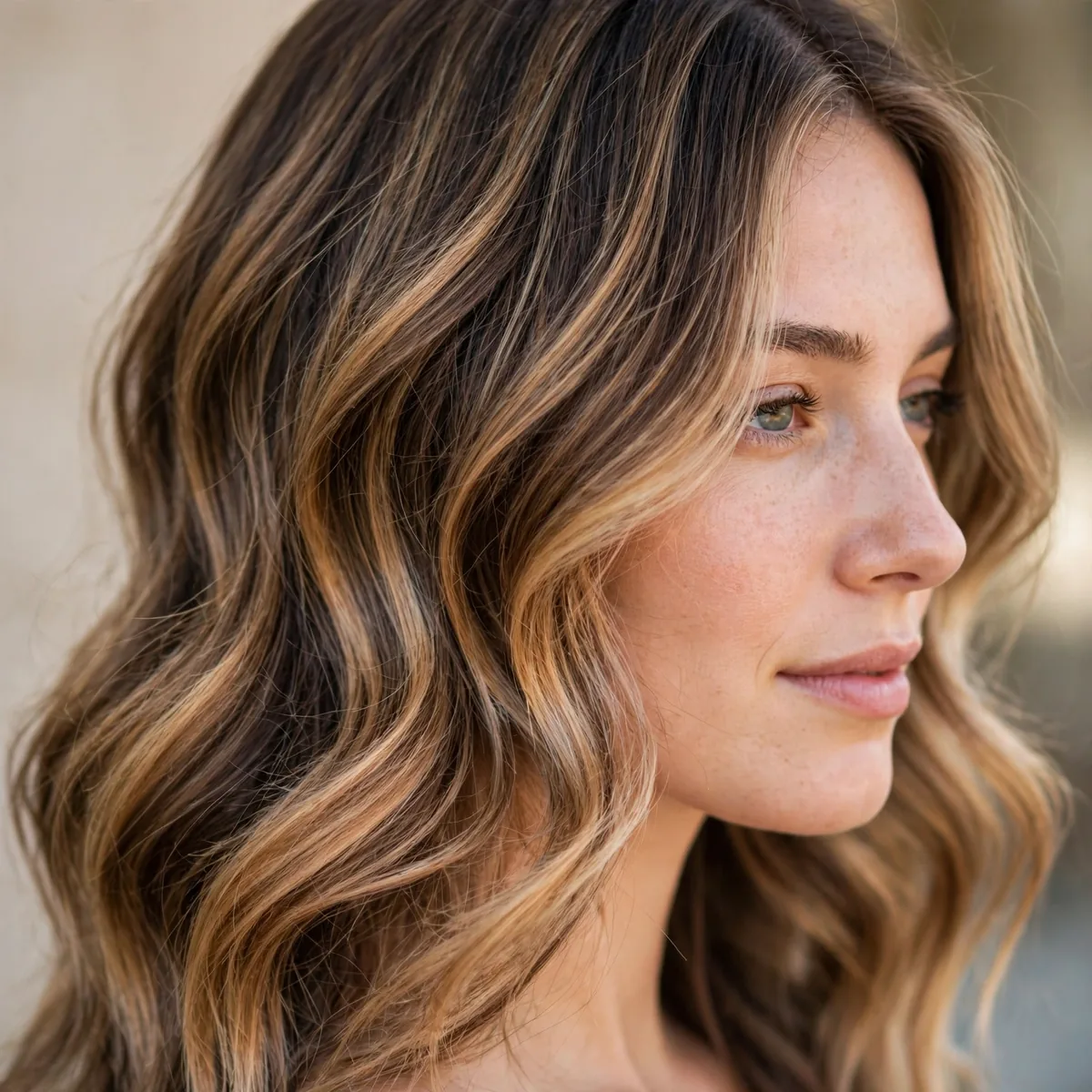
Toffee swirl balayage keeps your dark blonde base and paints ribbons of warm toffee through it — like caramel swirled into vanilla ice cream. For fine hair, this is comfort food color: the base stays deep enough to look dense, while the toffee ribbons add the warmth and light that make hair look alive. It's rich, cozy, and incredibly flattering, especially in the cooler months when warm tones echo the season.
Toffee flatters warm and neutral skin tones, and the golden-brown ribbons make brown and hazel eyes glow. The technique suits fine hair beautifully because the contrast is moderate — bold enough to create dimension, soft enough to grow out invisibly. Wear it with bouncy, voluminous styling: a round-brush blowout, velcro rollers at the crown, or big soft waves. The toffee pieces pop most when the hair has movement.
This is a single-process-friendly color for many people — if your natural base is dark blonde, the colorist may only need to lift the ribbon sections, keeping damage minimal. The toffee tone is achieved with a demi-permanent gloss, which is gentle and fades gracefully. Expect to refresh the gloss every eight weeks and do a partial balayage two or three times a year. It's one of the most budget-friendly options on this list.
At home, warm tones need protection from fading: wash with lukewarm water, use color-safe shampoo, and limit clarifying treatments. A weekly mask with shea butter keeps the toffee ribbons glossy — glossy warm tones look rich, while dull ones look brassy. If the toffee starts fading, a caramel color-depositing conditioner once a week revives it without a salon visit.
Bright Money Piece with Soft Balayage
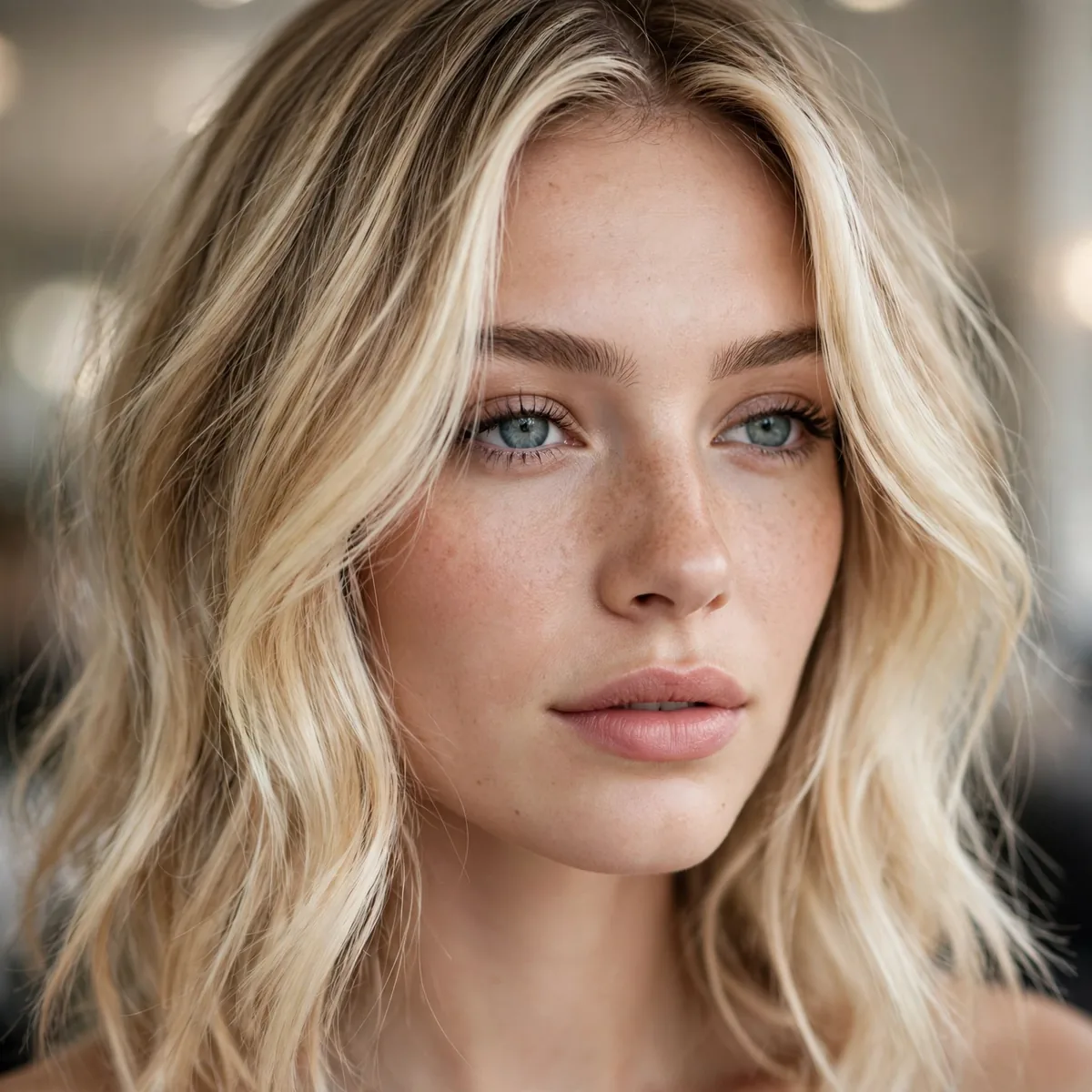
The money piece — those two bright ribbons framing the face — is the highest-impact, lowest-commitment balayage for fine hair. Your colorist lifts just the front sections to a bright, clean blonde while the rest of the hair gets a soft, subtle balayage. The result: maximum brightness where everyone looks, minimal bleaching everywhere else. For fine hair, this means you get the full blonde effect with a fraction of the damage.
The money piece is universally flattering because brightness around the face brightens the complexion and draws attention to your eyes. It works with every base color and every face shape — on fine hair, it's particularly effective because it creates a focal point that distracts from thinness elsewhere. Style it to show off: a center part displays both ribbons symmetrically, while a deep side part makes one ribbon a dramatic statement. Either way, keep the front pieces smooth and glossy.
Because only a small section is heavily lifted, appointments are quick and affordable — many salons offer this as an express service. The money piece does need more frequent toning than the rest (every six weeks or so) because it's the lightest and most visible section. But the back of your hair stays healthy and strong, which is what matters most for fine hair's overall integrity.
At home, give the money piece a little extra love: it's the most processed part of your hair, so apply your best leave-in conditioner there first. Purple shampoo applied just to the front sections keeps them bright without over-toning the softer balayage behind. When heat styling, use a lower temperature on the money piece — it's already been through the most chemical processing.
Copper-Kissed Blonde Balayage
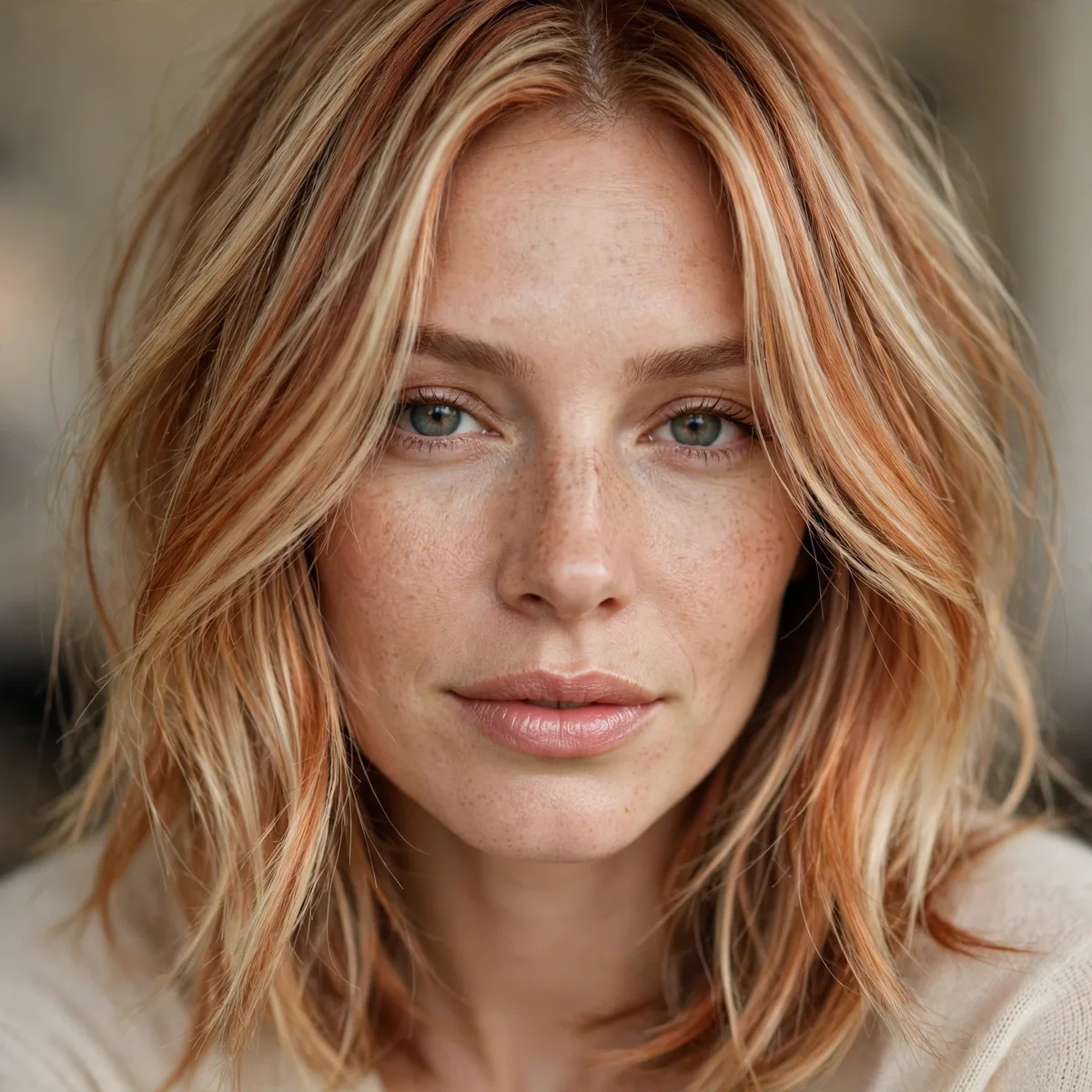
Copper-kissed blonde is where blonde meets auburn — a golden blonde balayage warmed with ribbons of copper and amber. On fine hair, the copper tones add a richness and light-play that pure blonde can't match: the warm metallic reflects light in a way that makes strands look thicker and more vibrant. It's also one of the most complexion-flattering colors on this list, giving fair and medium skin a healthy, lit-from-within glow.
This shade is having a major moment, and it suits fine hair particularly well because the multi-tonal warmth creates depth without darkness. The copper ribbons should be painted through the mid-lengths and ends, keeping the root area a soft golden blonde for easy grow-out. Wear it with texture — tousled waves, a messy low bun, or air-dried bends all let the copper catch light from different angles. The more movement, the more dimensional it looks.
Copper tones fade faster than any other color, so go in with eyes open: this is a higher-maintenance choice. Your colorist should use a demi-permanent copper gloss over the balayage, which fades gracefully to a pretty golden blonde over four to six weeks. Plan on gloss refreshes every five to six weeks to keep the copper vibrant. The upside is that the fade is beautiful — you get two colors for the price of one.
Extend the copper with cool-water washes and a copper color-depositing conditioner used weekly. Heat is copper's enemy, so embrace heatless styling when you can — overnight braids give you waves that show off the copper dimension without fading it. A UV-protectant spray is essential if you spend time in the sun, which strips copper faster than anything else.
Smoky Beige Balayage for Thin Ends
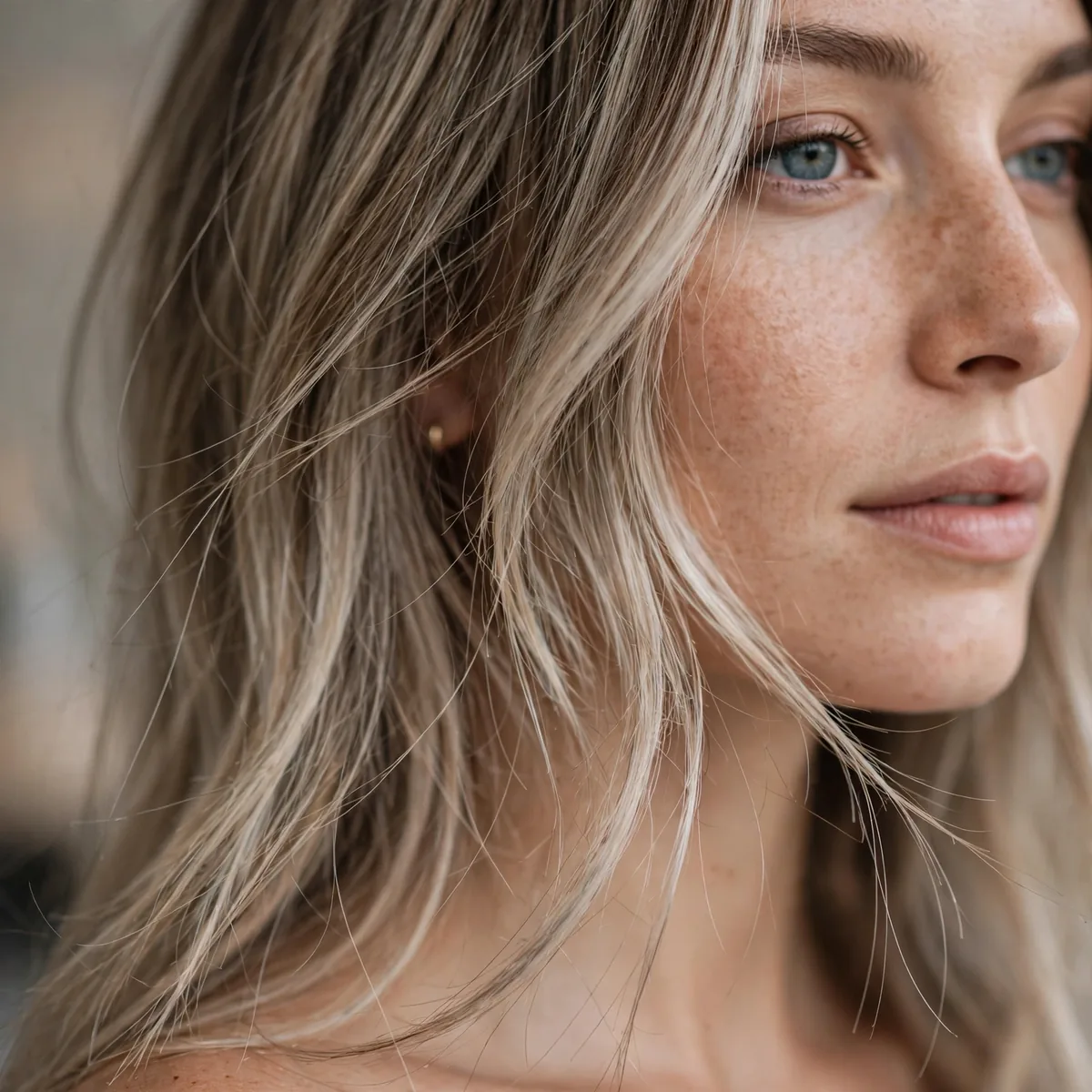
Thin, wispy ends are fine hair's most vulnerable spot — and smoky beige balayage is designed to disguise them. The technique keeps the ends a soft, diffused beige rather than a bright blonde, because bright ends on thin hair emphasize how little hair is actually there. Instead, the smoky beige creates a soft, hazy finish that makes ends look denser and more substantial. It's color as camouflage, and it works beautifully.
The smoky quality comes from a toner with a blend of beige and a whisper of gray — just enough to mute the brightness without going dull. This shade flatters cool to neutral skin tones and looks sophisticated rather than trendy. Pair it with a blunt or micro-layered cut: blunt ends are the single best haircut trick for thin ends, and the smoky beige color makes that blunt perimeter look even thicker. It's the color-and-cut combination that fine hair dreams about.
Ask your colorist to keep the balayage ribbons subtle through the ends — no harsh brightness at the tips. The goal is a soft, even beige from mid-length to ends, with slightly more dimension through the mid-shaft. A dusting trim every eight weeks keeps the ends looking thick; split ends on fine hair make thinness dramatically worse, so regular trims are part of the color strategy, not separate from it.
At home, the smoky tone needs gentle care: purple shampoo used too often will push it gray, so limit it to every other week and alternate with a moisturizing shampoo. A pea-sized amount of smoothing cream on the ends before styling keeps them looking polished rather than frayed. If your ends are very thin, consider a clear gloss treatment — it coats each strand and makes ends look plumper without changing the color.
Platinum Root Melt for Fine Hair
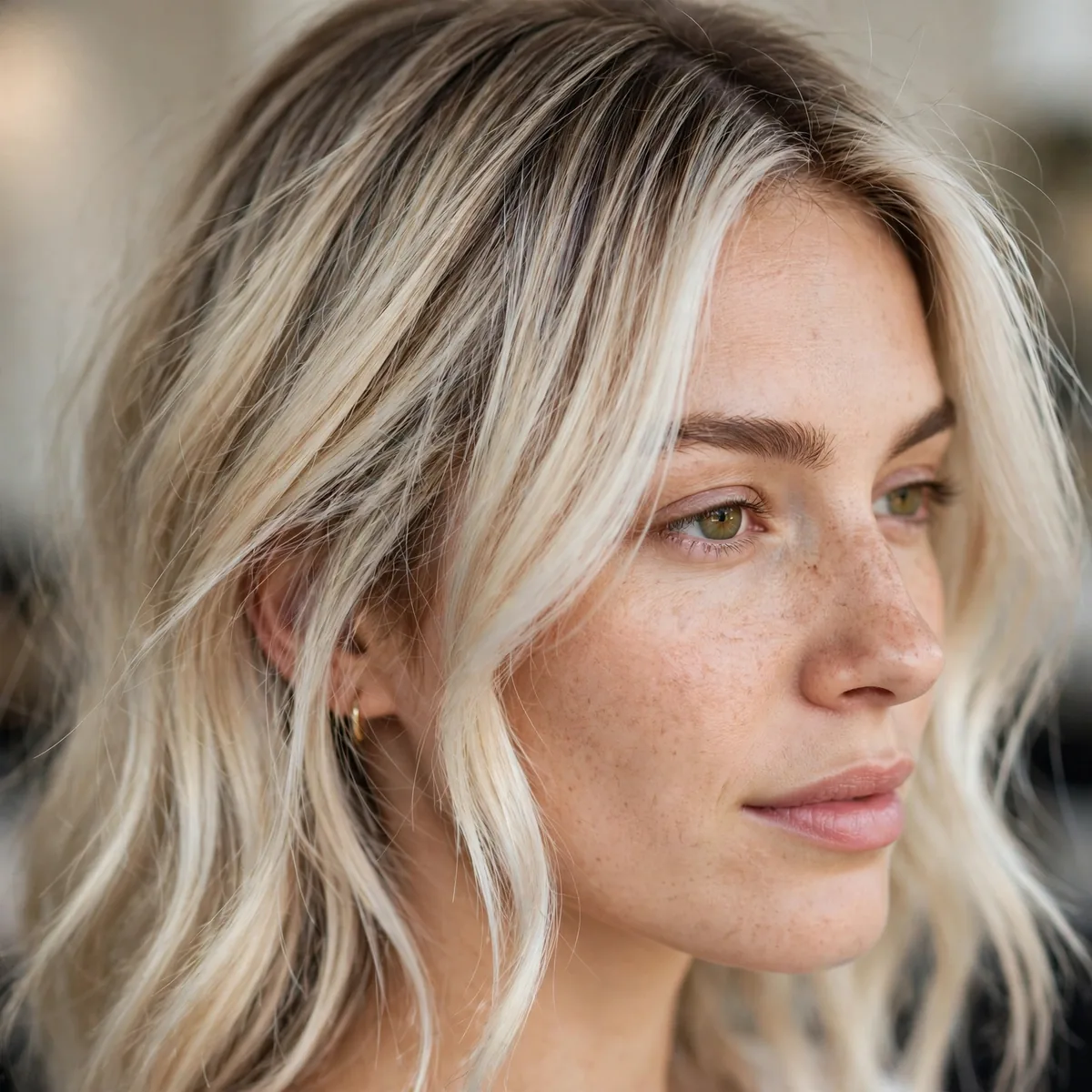
A platinum root melt flips the usual script: instead of a dark root melting into blonde ends, a bright platinum root melts softly into slightly deeper blonde lengths. For fine hair, this is a bold volume trick — the brightest point is at the crown, which draws the eye up and creates the impression of fullness where fine hair needs it most. It's striking, high-fashion, and not for the faint of heart, but the payoff is unforgettable.
This look demands a confident cool skin tone and a commitment to maintenance — there's no way around it. The root area is the most visible part of this color, so regrowth shows fast; plan on root touch-ups every four to six weeks. But the melt technique means even the regrowth looks softer than a traditional bleach-and-tone. Wear it sleek and straight for maximum impact — the platinum root against smoother lengths looks editorial and expensive.
For fine hair, the lifting must be done with extreme care. The root area is the healthiest part of your hair (it's the newest growth), which actually works in your favor — virgin roots lift more predictably than previously colored lengths. Your colorist should use a gentle lightener with a bond-builder and may recommend a slightly warmer platinum at the root that melts into cooler lengths, which is kinder to the hair and easier to maintain.
At home, this is the highest-maintenance color on the list: purple shampoo twice a week, a deep conditioning mask weekly, and minimal heat styling. The root area can handle slightly more washing than the lengths, so consider shampooing just the roots between full washes to keep the platinum bright without drying the ends. A root-concealing powder in platinum can stretch appointments by a week in a pinch.
Golden Hour Balayage with Babylights
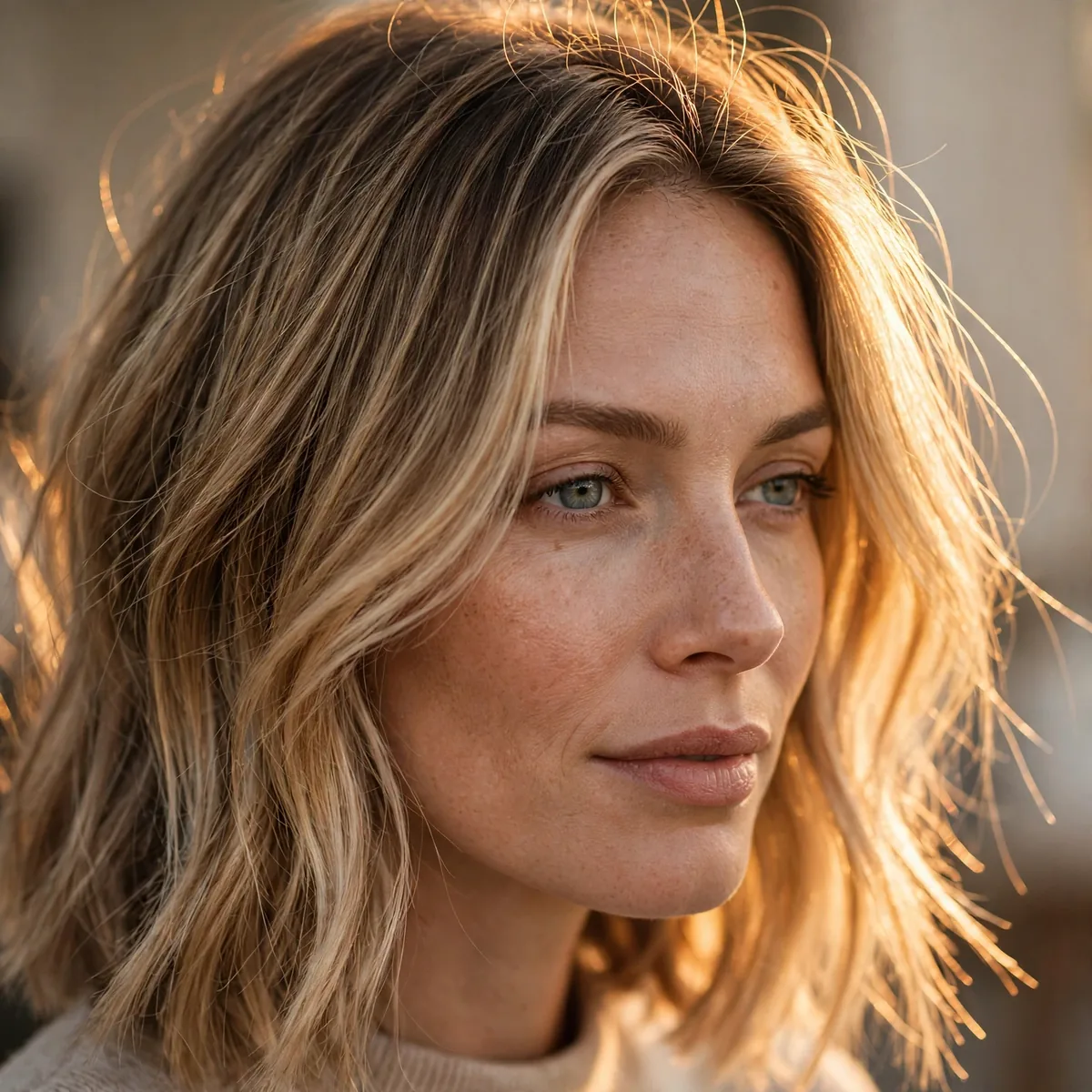
Golden hour balayage captures that magical late-afternoon light in hair form — warm golden babylights painted in a balayage technique through a honey-blonde base. The babylights add intricate, fine detail while the balayage placement keeps it soft and sun-kissed. On fine hair, this combination is luminous perfection: the multitude of tiny golden pieces creates a shimmering effect that makes hair look abundant and full of life. It's the closest thing to bottled sunshine.
This is the blonde for warm skin tones and anyone who wants to look like they glow from within. The golden tones reflect light so effectively that fine hair looks thicker in every lighting condition — daylight, candlelight, camera flash. Style it with loose, touchable waves; the golden pieces catch light differently in every bend, creating a constant play of light and shadow that reads as volume. A center part shows off the babylight detail around the face.
The technique is labor-intensive — babylights require meticulous sectioning — so budget for a longer appointment and a higher price point. But the grow-out is exceptionally graceful: the fine weaves mean no lines ever appear, and the balayage placement keeps the roots natural. Most wearers go three to four months between full sessions. Ask your colorist for a golden toner with honey and champagne reflects rather than a flat gold — the multi-tonal gold is what creates the golden-hour effect.
Maintain the golden glow with a sulfate-free shampoo and a weekly mask — golden tones look best when the hair is healthy and reflective. A lightweight shine oil on the ends (just the ends) amplifies the golden-hour shimmer. Avoid purple shampoo unless the gold starts going brassy; over-toning will kill the warmth that makes this color special. This is a color to protect, not correct.
Bring your favorite sun-kissed blend to your colorist — and for more blonde dimension, explore our foilayage ideas for blonde hair and honey balayage ideas.