
The goal isn't hiding your forehead — it's balancing it so your whole face shines.
Hairstylists think in proportions: a larger forehead just needs visual weight elsewhere — bangs, side volume, face-framing layers — to bring the face into harmony. It's the same principle as contouring, done with hair instead of makeup.
The most flattering approaches all create horizontal interest across the forehead or add width at the cheeks and jaw. Bangs are the obvious answer, but side parts, volume, and strategic layering work just as beautifully.
Whether you love bangs or avoid them, these 20 styles prove a bigger forehead is simply a styling opportunity. Find the balance that feels like you.
Curtain Bangs and Layers

Curtain bangs are the universally flattering answer to a larger forehead — parted in the middle and sweeping to each side, they break up the forehead's expanse while framing the eyes. The softness keeps them modern, never severe. It's the style that launched a thousand salon appointments. The shape grows out gracefully, holding its structure for weeks without looking overgrown or shapeless.
This works on straight, wavy, and curly hair at almost any length. Ask for bangs that start at the cheekbone and blend into face-framing layers — the curtain should be longest at the sides, shortest near the center part. The blend into layers is what makes them grow out gracefully.
Style by blow-drying the bangs away from the face with a round brush, creating that signature swoop. A little texturizing spray keeps them piecey. They air-dry well on wavy hair — the natural bend does the curtain work for you. Dry shampoo at the roots on day two revives volume without a full wash.
Curtain bangs need trimming every four to six weeks to hold the shape, but they grow out into face-framing layers seamlessly. It's the lowest-commitment bang with the highest payoff for forehead balance. A clarifying shampoo once a month removes buildup that can weigh down the style. This cut requires minimal product, which keeps both your routine and your budget simple.
Side-Swept Fringe Bob

A side-swept fringe on a bob breaks the forehead into a diagonal — the most flattering geometry for a larger forehead. The diagonal line draws the eye across rather than up, visually shortening the forehead while the bob adds width at the jaw. Clever and chic. The ends look healthy and substantial, which is the true marker of a well-executed cut.
This suits straight and wavy hair, and flatters oval and long faces especially. Ask for a deep side part with the fringe swept long across — the fringe should be substantial enough to cover, piecey enough to look soft. The bob itself can be chin to shoulder length. This works beautifully on mature hair, since the shape adds youthfulness without trying too hard.
Blow-dry the fringe in its sweeping direction with a round brush for smoothness. A light pomade on the ends keeps the sweep defined. The deep side part is structural — commit to it, because a wavering part ruins the diagonal effect. A round brush and blow dryer bring out the cut's full potential, adding polish in under ten minutes.
Trim the fringe every four weeks; the bob every six to eight. The side sweep grows out into long layers gracefully, so there's no awkward phase. Diagonal lines are a large forehead's best friend. Track how the cut grows out so your stylist can adjust the shape at your next visit.
Wispy Full Bangs

Wispy full bangs cover the forehead with a soft, see-through texture — coverage without the heaviness of a blunt fringe. The wispiness keeps them light and modern, and the slight transparency means they flatter rather than mask. Soft coverage, maximum charm. Density appears greatest where the eye naturally lands first, which is the cleverest part of the design.
This works on straight to wavy hair and suits long and oval faces. Ask for bangs cut with point-cutting or razor texture so they're piecey — the gaps are the point. They should hit at or just below the brow, light enough to see skin through. Ask your stylist to customize the layering to your texture, since the same cut behaves differently on every head.
Style with fingers and a blow dryer — wispy bangs want air-drying or rough-drying, not precision. A tiny bit of dry shampoo at the roots keeps them from separating into strings. They look best slightly undone. For special occasions, hot rollers create bouncy volume that lasts well into the night.
Trim every three to four weeks to maintain the wispiness — grown-out wispy bangs just look like grown-out bangs. But the grow-out blends into layers easily. Light, pretty, and forgiving. This cut is forgiving between appointments, holding its shape longer than more precise cuts. Ask your stylist about the best at-home maintenance for your specific texture and density.
Deep Side Part Waves
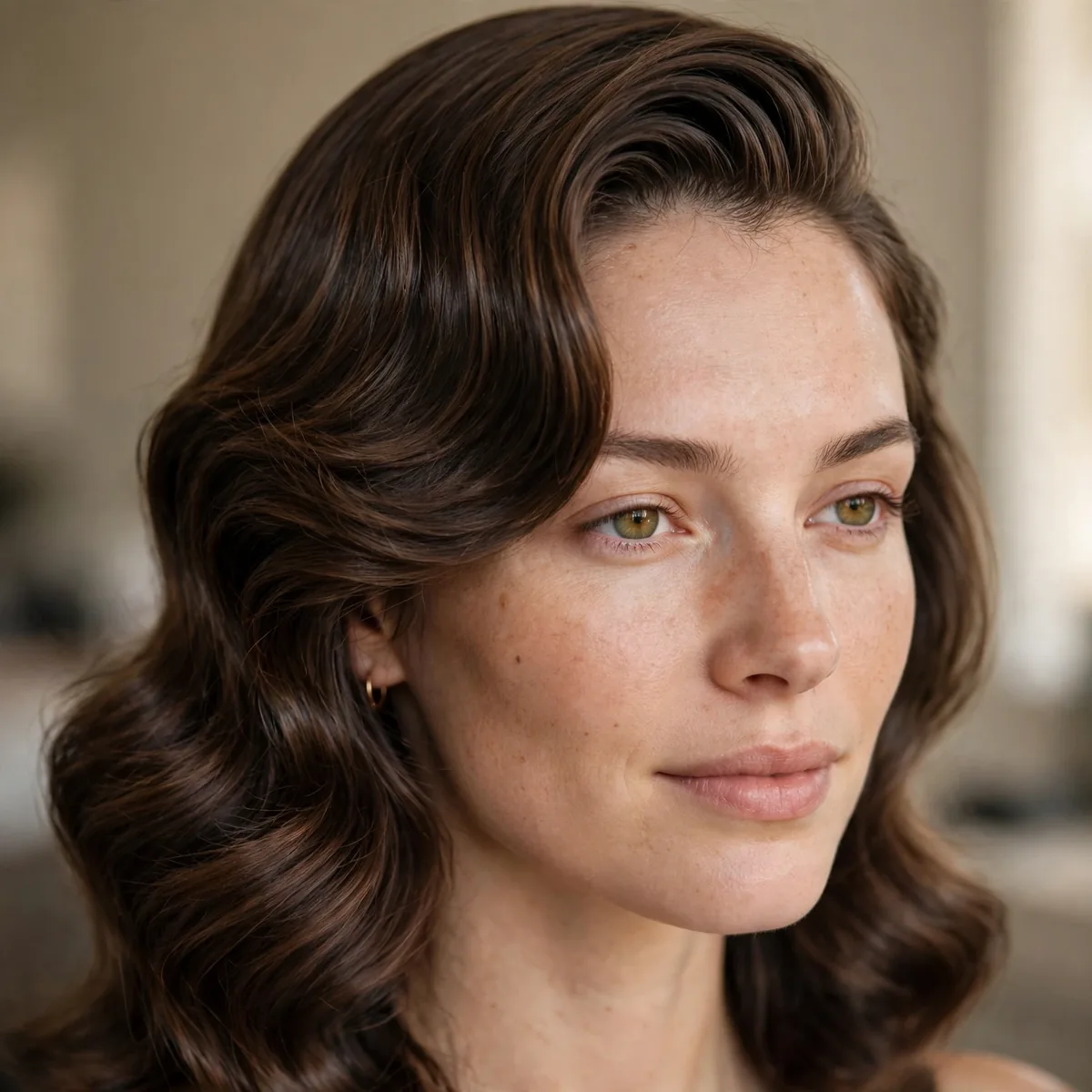
No bangs? No problem — a deep side part with waves creates the same diagonal coverage as a fringe. The heavy sweep of hair across the forehead breaks up its expanse, and the waves add width at the cheeks. It's the no-commitment forehead balancer. The silhouette reads full and intentional from every angle, with movement that catches the light beautifully.
This works on wavy and curly hair naturally, and on straight hair with styling. The part should be dramatic — two to three inches off center. Waves should start at eye level, adding volume where the face needs width. Length can be anything from lob to long. A razor finish adds softness, while scissor point-cutting keeps the ends looking thicker and healthier.
Create the waves with a large-barrel iron, curling away from the face, then brush through for softness. Set the part with a little pomade so it holds against your natural fall. The sweep across the forehead is the coverage — make it generous. Keep heat protectant in your routine whenever hot tools touch the hair to prevent damage.
This is a styling solution, not a cut — which means zero maintenance and total flexibility. On days you want the forehead covered, sweep deep; on days you don't, part normally. Versatility is the whole point. Avoid over-washing, since stripping natural oils leads to dryness that no product fully fixes.
Blunt Bangs Lob

Blunt bangs are the boldest forehead move — full, straight-across coverage that makes the forehead a non-issue. On a lob, the combination is strikingly modern: strong horizontal lines at the brow and the collarbone. It's a statement, and it works. The texture throughout prevents the flat, helmet-like finish that one-length cuts can sometimes produce.
This suits straight hair best — blunt bangs need a smooth canvas. Oval and long faces wear them beautifully. Ask for bangs cut straight across at brow level, thick enough for real coverage. The lob should be one length at the collarbone for architectural balance. Thick hair may need interior thinning to achieve the same lightness, while fine hair should skip it entirely.
Flat-iron the bangs smooth and keep them immaculate — blunt bangs show every flaw. Trim them yourself between appointments or visit every three weeks; grown-out blunt bangs lose their power fast. A shine serum keeps them glossy. Finger-styling with a small amount of pomade creates piecey definition that looks modern.
This is high-commitment but high-reward. Blunt bangs completely transform the face's proportions — the forehead effectively disappears from the equation. For those ready to commit, nothing balances faster. Regular trims every six to eight weeks keep the shape intentional rather than overgrown. A clarifying shampoo once a month removes buildup that can weigh down the style.
Face-Framing Layers
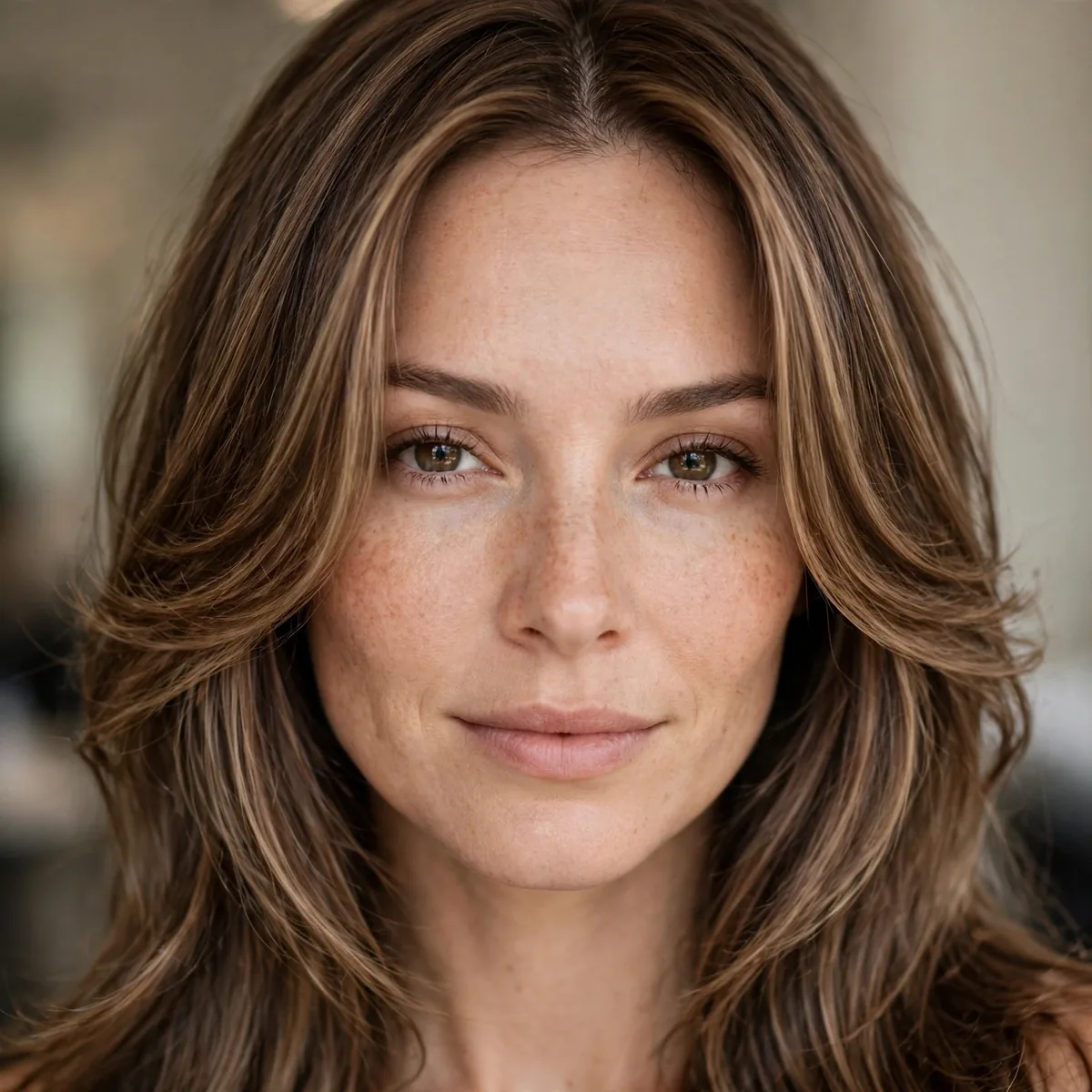
Face-framing layers add width at the cheeks and jaw, balancing a larger forehead by building visual weight lower on the face. The layers draw the eye down and out, creating an hourglass effect in the hair that mirrors ideal facial proportions. Subtle but powerful. Natural texture enhances this cut, but it also responds well to heat styling for sleeker finishes.
This works at any length from bob to long, on straight, wavy, or curly hair. Ask for layers that start at the cheekbone and cascade down — the shortest pieces do the most balancing work. The layers should be blended, not chunky, for a natural effect. Side parts versus center parts change the entire feel, so experiment before committing to one.
Style the framing pieces with a bend — a flat iron flick or round-brush curl — so they curve away from the face. Flat framing pieces hang limp and do nothing; curved ones create the width. A texturizing spray adds separation. This cut pairs well with soft waves for evenings and sleek finishes for professional settings.
Layers need refreshing every eight to ten weeks. This is the most invisible forehead solution — nobody will know it's strategic, they'll just think your hair looks great. Balance without bangs. This cut requires minimal product, which keeps both your routine and your budget simple. Track how the cut grows out so your stylist can adjust the shape at your next visit.
Textured Pixie With Fringe
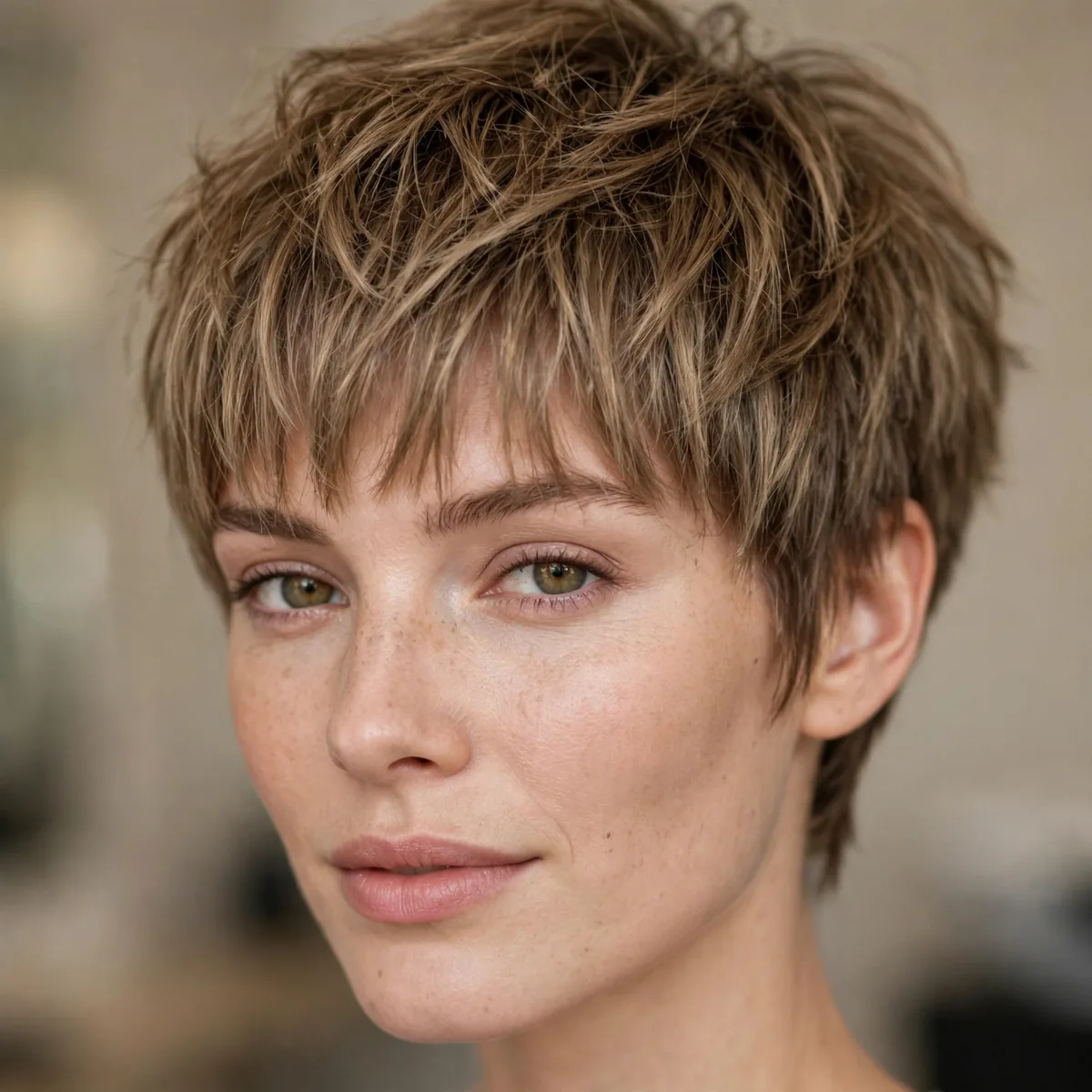
A textured pixie with a fringe covers the forehead while showing off the face — the fringe breaks up the forehead's height and the pixie's texture adds width at the temples. It's bold, modern, and incredibly flattering. Short hair, big impact. The perimeter stays strong even as the interior moves, balancing structure with softness.
This suits oval, heart, and square faces, and works on straight or wavy hair. Ask for a pixie with a substantial fringe — long enough to cover, textured enough to look soft. The sides should have some fullness at the temple to add horizontal width. Bring reference photos to your appointment, since describing texture verbally often leads to miscommunication.
Style the fringe forward and piecey with a texturizing paste. The texture is everything — smooth pixie fringes look severe, piecey ones look chic. Work the product through dry hair, piece by piece. A deep side part adds drama, while a center part keeps things modern and understated. Dry shampoo at the roots on day two revives volume without a full wash.
Pixies need trims every four to five weeks. But the forehead coverage is built into the cut — no daily styling tricks needed. For those ready to go short, this is the most flattering pixie for a larger forehead. This cut is forgiving between appointments, holding its shape longer than more precise cuts.
Voluminous Curls
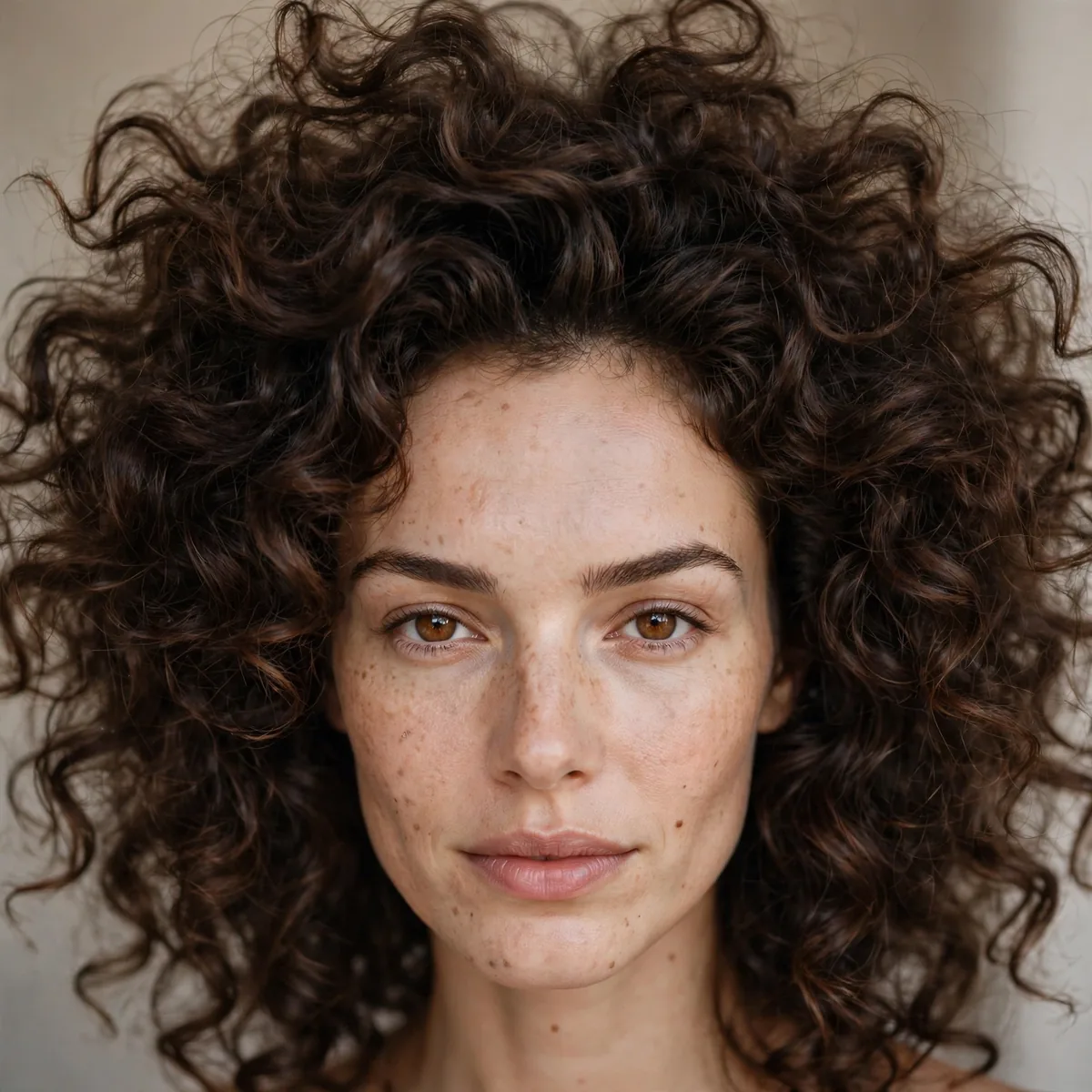
Volume is the great equalizer — big, voluminous curls add so much width around the face that the forehead's height becomes proportionally perfect. The curls create a halo of width that balances everything. It's physics, and it's gorgeous. The shape grows out gracefully, holding its structure for weeks without looking overgrown or shapeless.
This is ideal for naturally curly or wavy hair — work with the texture, not against it. The volume should be concentrated at the sides, around the cheeks and jaw, not just on top. Top volume alone elongates; side volume balances. Curly and wavy textures should be cut dry or in their natural state for the most predictable result.
Diffuse upside down for maximum root lift, then arrange the curls to fall wide around the face. A pick at the roots adds width. The goal is a rounded silhouette — width matching height. A round brush and blow dryer bring out the cut's full potential, adding polish in under ten minutes.
Curly cuts every eight to twelve weeks maintain the shape. This is the most joyful forehead solution — instead of covering, you're balancing with abundance. Big hair, perfect proportions. Ask your stylist about the best at-home maintenance for your specific texture and density. Avoid over-washing, since stripping natural oils leads to dryness that no product fully fixes.
The Bottleneck Bang

Bottleneck bangs — narrow at the top, wider at the cheekbones — are the trendy answer to forehead coverage. The shape covers the center forehead while opening at the sides, framing the eyes beautifully. It's the it-girl bang, and it's strategic. The ends look healthy and substantial, which is the true marker of a well-executed cut.
This works on straight and wavy hair, suits oval and heart faces. Ask for bangs that are shorter and narrower in the center, lengthening toward the temples — the 'bottleneck' shape. They should hit between the brow and the cheekbone at their longest. This works beautifully on mature hair, since the shape adds youthfulness without trying too hard.
Style with a round brush, curving the bangs to follow the bottleneck shape — in at the top, out at the sides. The shape does the work; the styling just enhances it. They air-dry well on wavy hair. For special occasions, hot rollers create bouncy volume that lasts well into the night.
Trim every four to six weeks. Bottleneck bangs grow out into curtain bangs, so the evolution is graceful. Trendy, flattering, and engineered for forehead balance. Regular trims every six to eight weeks keep the shape intentional rather than overgrown. A clarifying shampoo once a month removes buildup that can weigh down the style.
Low Side Ponytail

A low side ponytail with a deep side part sweeps hair diagonally across the forehead — coverage and elegance in one. The asymmetry breaks up the forehead's expanse while the low placement keeps it sophisticated. It's the updo that flatters. Density appears greatest where the eye naturally lands first, which is the cleverest part of the design.
This works on medium to long hair of any texture. Create a deep side part, sweep the front across the forehead, and gather low at the nape on the opposite side. Leave the sweep soft — pulled-tight looks severe, soft looks romantic. Ask your stylist to customize the layering to your texture, since the same cut behaves differently on every head.
Add texture before gathering — waves or curls in the ponytail, a little backcombing at the crown. Pull out a few face-framing pieces to soften. The sweep across the forehead is the coverage; make it generous and soft. Keep heat protectant in your routine whenever hot tools touch the hair to prevent damage.
This is a styling solution for events — no cut required. It takes five minutes and photographs beautifully. The diagonal sweep is endlessly flattering on larger foreheads. This cut requires minimal product, which keeps both your routine and your budget simple. Track how the cut grows out so your stylist can adjust the shape at your next visit.
Shaggy Layers With Bangs

The shag with bangs is forehead coverage with rock-and-roll soul — choppy bangs break up the forehead while the shaggy layers add width everywhere else. It's the cool-girl solution: balanced proportions with zero preciousness. The silhouette reads full and intentional from every angle, with movement that catches the light beautifully.
This suits wavy and straight hair, medium to long lengths. Ask for textured bangs — piecey, not blunt — blended into shaggy layers throughout. The layers should be heaviest around the cheeks and jaw for maximum balancing width. A razor finish adds softness, while scissor point-cutting keeps the ends looking thicker and healthier.
Style undone — sea-salt spray, scrunch, air-dry. The shag wants to look effortless; over-styling kills it. The bangs can be finger-styled forward with a little texture. Finger-styling with a small amount of pomade creates piecey definition that looks modern. This cut pairs well with soft waves for evenings and sleek finishes for professional settings.
Trims every eight to ten weeks. The shag grows out beautifully — the bangs become curtain bangs, the layers get longer. It's the low-maintenance forehead solution with maximum style. This cut is forgiving between appointments, holding its shape longer than more precise cuts. Ask your stylist about the best at-home maintenance for your specific texture and density.
Half-Up Volume
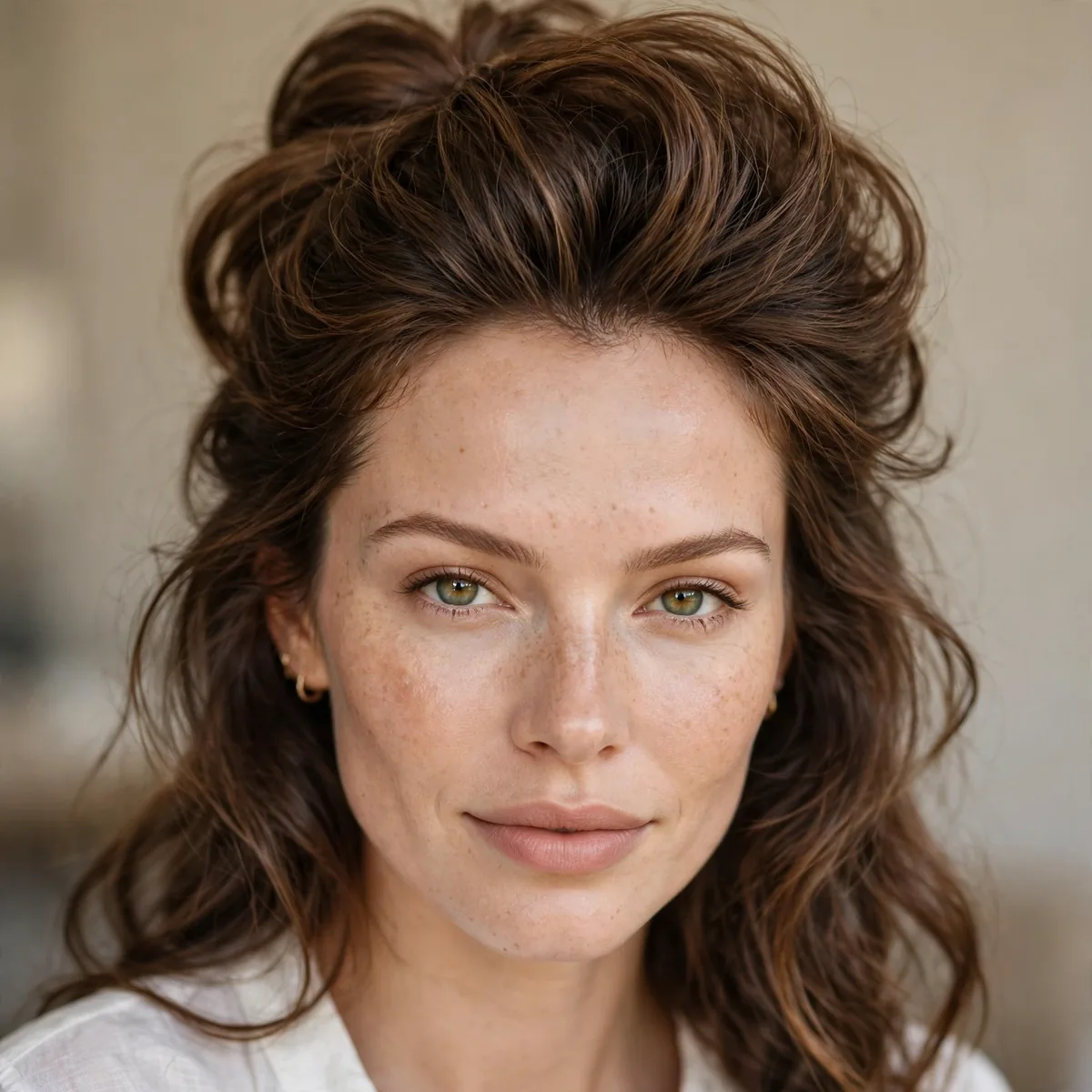
A half-up style with crown volume lifts the eye upward and outward — the height at the crown balances forehead height by adding competing vertical interest, while the loose front pieces soften. It's the updo that works with your proportions, not against them. The texture throughout prevents the flat, helmet-like finish that one-length cuts can sometimes produce.
This works on medium to long hair. Tease or bump the crown for height, secure the top section, and leave the rest down. Crucially, leave soft pieces around the face — pulled-back-tight exposes the forehead; soft pieces frame it. Thick hair may need interior thinning to achieve the same lightness, while fine hair should skip it entirely.
The crown height is the balancing act — it should be noticeable but not extreme. A small bump, not a beehive. The face-framing pieces should fall naturally, breaking up the forehead's edges. A deep side part adds drama, while a center part keeps things modern and understated. Dry shampoo at the roots on day two revives volume without a full wash.
This is an event styling solution — quick, pretty, and strategic. The combination of crown height and face-framing softness is universally flattering on larger foreheads. Avoid over-washing, since stripping natural oils leads to dryness that no product fully fixes. Regular trims every six to eight weeks keep the shape intentional rather than overgrown.
Asymmetric Bob
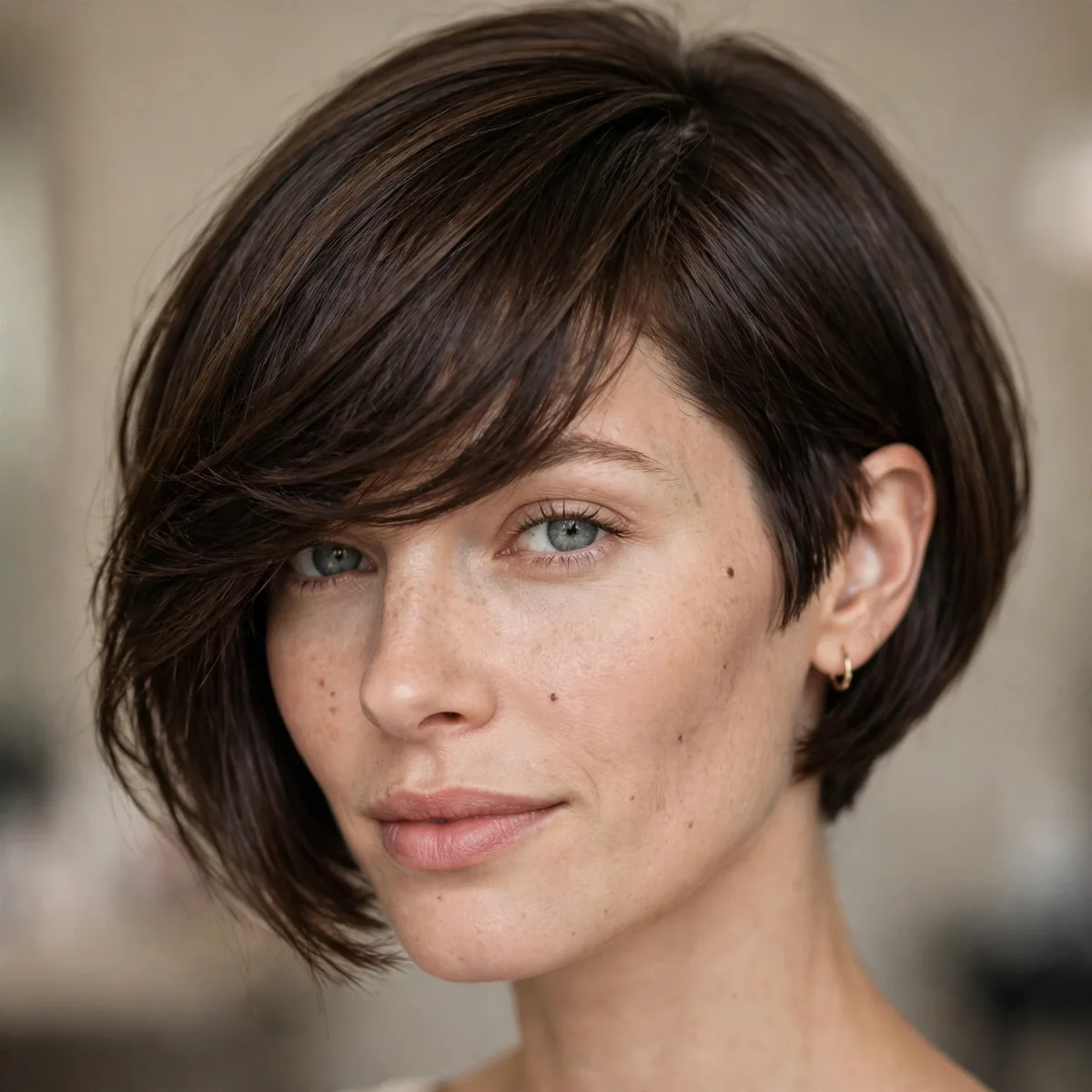
Asymmetry disrupts the eye's measurement of the forehead — the uneven lines keep the gaze moving instead of settling on proportions. An asymmetric bob with a side part is modern, striking, and quietly strategic. The eye sees style, not forehead. Natural texture enhances this cut, but it also responds well to heat styling for sleeker finishes.
This suits straight hair best, chin to jaw length. Ask for a noticeable length difference — two inches or more — with a deep side part. The longer side should fall across the face, adding diagonal coverage to the asymmetry's distraction. Side parts versus center parts change the entire feel, so experiment before committing to one.
Style sleek to emphasize the architectural lines, or textured for softness. The deep side part is essential — center-parted asymmetry loses its power. Tuck the shorter side behind the ear to accentuate the difference. A round brush and blow dryer bring out the cut's full potential, adding polish in under ten minutes.
Trims every six weeks maintain the deliberate imbalance. This is the fashion-forward forehead solution — for those who'd rather distract with style than cover with bangs. A clarifying shampoo once a month removes buildup that can weigh down the style. This cut requires minimal product, which keeps both your routine and your budget simple.
Braided Crown Detail
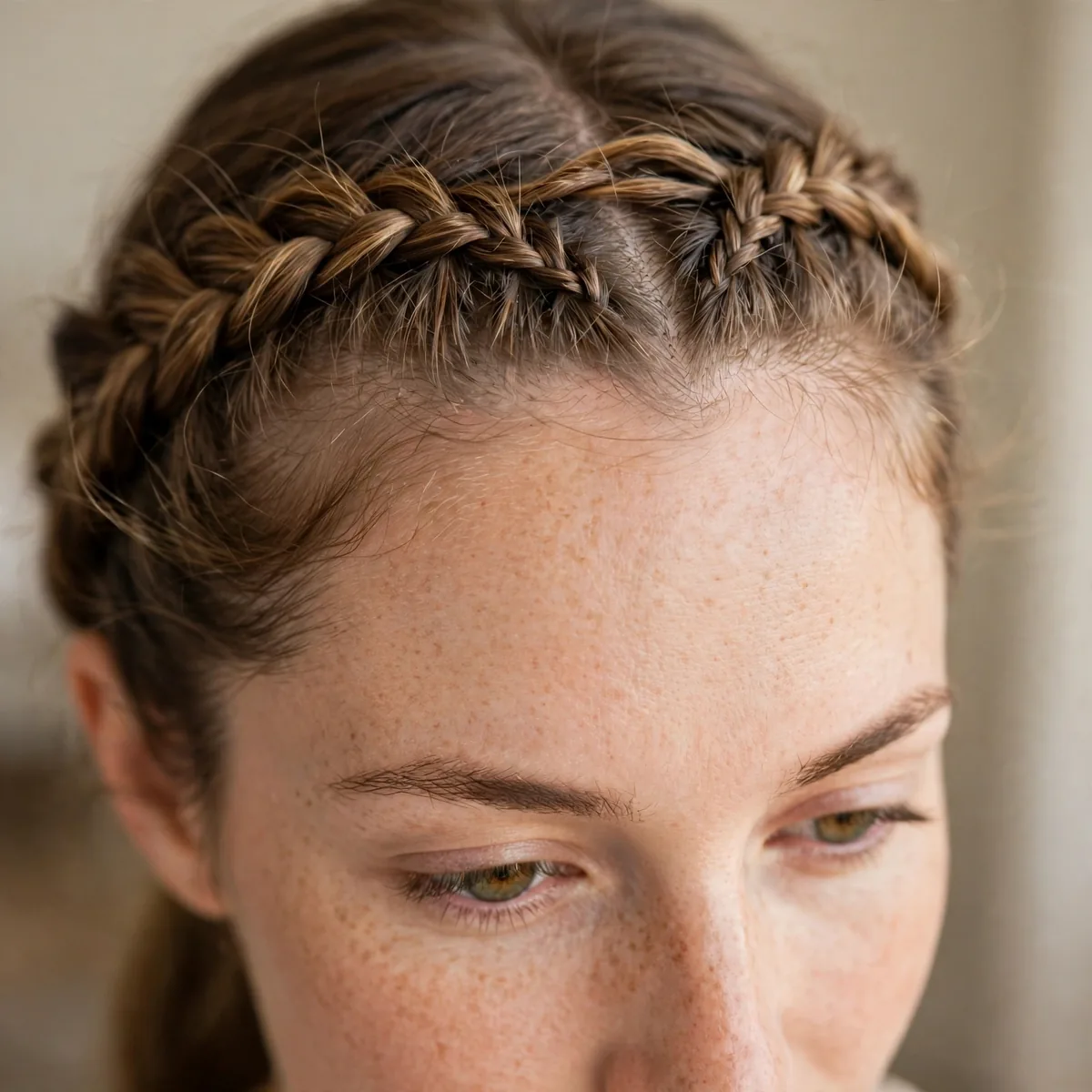
A braided crown or headband braid adds horizontal interest right at the hairline — the braid's texture breaks up the forehead's expanse exactly where it meets the hair. It's romantic, detailed, and strategically placed. Boho with a purpose. The perimeter stays strong even as the interior moves, balancing structure with softness.
This works on medium to long hair. Braid along the hairline from one temple to the other — a Dutch or French braid that sits like a headband. Keep it slightly loose for softness; tight braids look severe against a larger forehead. Bring reference photos to your appointment, since describing texture verbally often leads to miscommunication.
Pair with waves or texture in the remaining hair — the contrast between the structured braid and soft waves is the charm. Pull out a few wisps around the face to soften the hairline further. For special occasions, hot rollers create bouncy volume that lasts well into the night. Keep heat protectant in your routine whenever hot tools touch the hair to prevent damage.
This is a special-occasion style — it takes practice but photographs beautifully. The braid's placement is the strategy: horizontal detail at the hairline visually shortens the forehead. Track how the cut grows out so your stylist can adjust the shape at your next visit. This cut is forgiving between appointments, holding its shape longer than more precise cuts.
Long Layers, Center Part
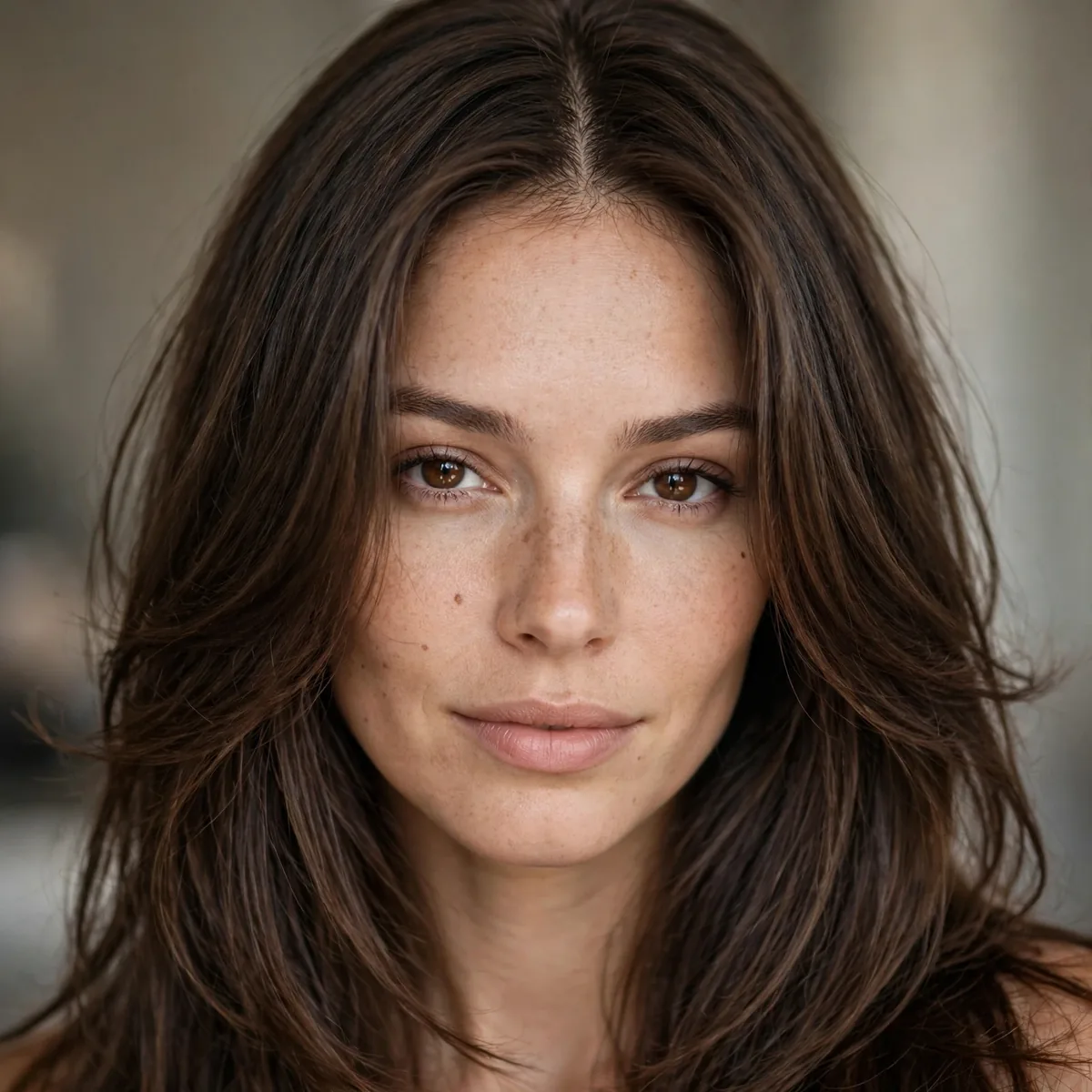
Long layers with a center part balance a larger forehead through sheer frame — the long hair on both sides creates vertical lines that make the forehead look proportionally smaller. It's the supermodel solution: length as balance. The shape grows out gracefully, holding its structure for weeks without looking overgrown or shapeless.
This needs length — past the shoulders at minimum — and works on straight, wavy, or curly hair. The layers should start at the chin, adding movement without removing the framing length. The center part must be precise; a wobbly part ruins the symmetry. Curly and wavy textures should be cut dry or in their natural state for the most predictable result.
Style with volume at the roots and movement through the lengths — flat long hair elongates the face further. Waves or curls add the width that balances. The hair should frame, not hang. Finger-styling with a small amount of pomade creates piecey definition that looks modern. This cut pairs well with soft waves for evenings and sleek finishes for professional settings.
Trims every ten to twelve weeks. This is the commitment solution — it takes time to grow, but long, well-layered hair is one of the most flattering balances for a larger forehead. Patience pays. Ask your stylist about the best at-home maintenance for your specific texture and density. Avoid over-washing, since stripping natural oils leads to dryness that no product fully fixes.
Pixie With Long Bangs
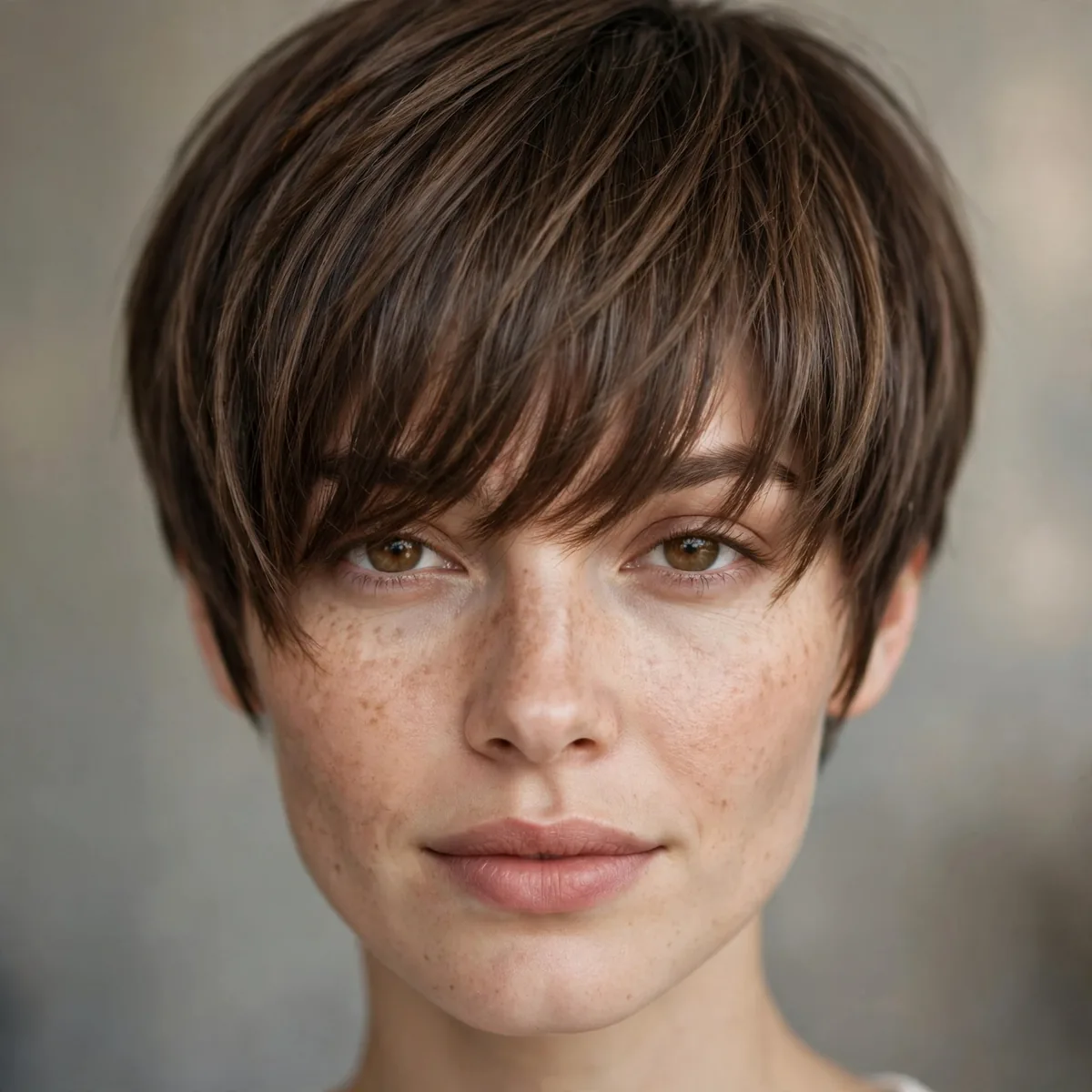
A pixie with long, sweeping bangs gives full forehead coverage in a short cut — the bangs do the balancing while the pixie keeps everything else chic. It's the short-hair solution that doesn't sacrifice forehead strategy. The ends look healthy and substantial, which is the true marker of a well-executed cut.
This suits oval and heart faces, straight or wavy hair. Ask for a pixie with the top left long — the bangs should sweep across the forehead, substantial enough to cover. The back and sides stay short and tapered for contrast. This works beautifully on mature hair, since the shape adds youthfulness without trying too hard.
Style the bangs forward and across with a texturizing product. The sweep direction matters — train it with the blow dryer. The bangs are the feature; keep them piecey, not plastered. A deep side part adds drama, while a center part keeps things modern and understated. Dry shampoo at the roots on day two revives volume without a full wash.
Trims every four to five weeks. This is for the bold — short hair with a strong fringe is a statement. But the forehead coverage is complete, and the style is undeniably chic. Regular trims every six to eight weeks keep the shape intentional rather than overgrown. A clarifying shampoo once a month removes buildup that can weigh down the style.
The Modern Mullet

The modern mullet — soft, textured, with bangs — is the edgy forehead solution. The bangs cover while the mullet's shape adds width at the temples and texture everywhere. It's fashion-forward balance for the fearless. Density appears greatest where the eye naturally lands first, which is the cleverest part of the design.
This suits wavy and curly textures best; straight hair needs styling to achieve the texture. Ask for soft, modern mullet shaping — not the 80s version — with textured bangs. The top should have volume, the back length. Ask your stylist to customize the layering to your texture, since the same cut behaves differently on every head.
Style with texture products — the mullet wants piecey, lived-in definition. The bangs can be worn forward and textured. This is a wash-and-go cut for the right texture. A round brush and blow dryer bring out the cut's full potential, adding polish in under ten minutes. For special occasions, hot rollers create bouncy volume that lasts well into the night.
Trims every eight weeks. The modern mullet is a commitment to a look — but for those who love it, the forehead coverage comes free with the coolest cut in the room. This cut requires minimal product, which keeps both your routine and your budget simple. Track how the cut grows out so your stylist can adjust the shape at your next visit.
Side-Parted Lob

The side-parted lob is the everyday forehead balancer — a deep side part sweeps hair across the forehead, and the lob's length adds weight at the jaw. Simple, professional, and endlessly wearable. The workhorse of forehead-flattering styles. The silhouette reads full and intentional from every angle, with movement that catches the light beautifully.
This works on straight, wavy, or curly hair at collarbone length. The part should be deep and deliberate — the sweep across the forehead is the coverage. The lob can be blunt or layered; both work with the side part. A razor finish adds softness, while scissor point-cutting keeps the ends looking thicker and healthier.
Style with the part set — blow-dry it into place or train it damp. Add a slight bend to the lengths for movement. Tuck the lighter side behind the ear for polish. Keep heat protectant in your routine whenever hot tools touch the hair to prevent damage. Finger-styling with a small amount of pomade creates piecey definition that looks modern.
No special maintenance — it's a styling choice on a classic cut. The side-parted lob proves forehead balance doesn't require bangs or drama. Just a part, placed with intent. This cut is forgiving between appointments, holding its shape longer than more precise cuts. Ask your stylist about the best at-home maintenance for your specific texture and density.
Wavy Bob With Micro-Fringe

A wavy bob with a micro-fringe is the fashion-editor's forehead solution — the short fringe covers the upper forehead while the waves add width below. The contrast between the graphic fringe and soft waves is striking and modern. The texture throughout prevents the flat, helmet-like finish that one-length cuts can sometimes produce.
This suits straight to wavy hair that can hold both textures. Ask for a micro-fringe — above the brow, textured — paired with a wavy bob at chin to jaw length. The fringe should be piecey, not solid; the waves should be soft, not tight. Thick hair may need interior thinning to achieve the same lightness, while fine hair should skip it entirely.
Style the fringe with fingers and a little texture — micro-fringes want piecey separation. Wave the bob with a medium iron and brush through. The two textures should contrast: graphic on top, soft below. This cut pairs well with soft waves for evenings and sleek finishes for professional settings. A deep side part adds drama, while a center part keeps things modern and understated.
Micro-fringes need trimming every three weeks — they grow out of the 'micro' zone fast. But the impact is immediate: full forehead strategy in the most editorial package on this list. Avoid over-washing, since stripping natural oils leads to dryness that no product fully fixes. Regular trims every six to eight weeks keep the shape intentional rather than overgrown.
Sleek Low Bun With Swoop

A sleek low bun with a swooped front section covers the forehead with old-Hollywood elegance — the deep swoop breaks up the forehead diagonally while the bun keeps everything polished. It's red-carpet forehead strategy. Natural texture enhances this cut, but it also responds well to heat styling for sleeker finishes.
This works on medium to long hair, straight or smoothed. Create a deep side part, swoop the front section across the forehead, and gather into a low bun at the nape. The swoop should be smooth and substantial — wispy swoops don't cover. Side parts versus center parts change the entire feel, so experiment before committing to one.
Smooth with a serum and a fine-tooth comb for the sleek finish. Secure the bun firmly — sleek styles show every lump. A strong-hold hairspray keeps the swoop in place all evening. Dry shampoo at the roots on day two revives volume without a full wash. A round brush and blow dryer bring out the cut's full potential, adding polish in under ten minutes.
This is an event style — polished, dramatic, and strategic. The diagonal swoop is one of the most flattering lines for a larger forehead, and the low bun keeps the focus on the face. A clarifying shampoo once a month removes buildup that can weigh down the style. This cut requires minimal product, which keeps both your routine and your budget simple.
Save the styles that balance your features best — and for more face-flattering fringe, see our curtain bang haircuts and hairstyles for a receding hairline.